Synopsis
Certified collision repair restores your vehicle using manufacturer-approved methods, proper diagnostics, and trained technicians. This approach supports accurate car collision repair, protects safety systems, and helps maintain structural integrity and long-term value after an accident.
Key Takeaways
- Certified collision repair restores both safety and structure
- ADAS systems require recalibration after most repairs
- OEM procedures help maintain crash performance
- Proper diagnostics reveal hidden collision damage
- Certified shops follow ongoing training and repair standards
Certified collision repair uses manufacturer-approved procedures, trained technicians, and proper diagnostic equipment to restore a vehicle after a collision. It addresses safety systems and structural integrity, not just appearance.
Modern vehicles rely on sensors, electronics, and engineered materials to protect drivers. A repair that overlooks those components leaves a car looking fixed but functioning below its original safety standard. At Auto Collision Center of Exeter, our I-CAR Gold Class certified team follows the procedures today’s vehicles actually require.
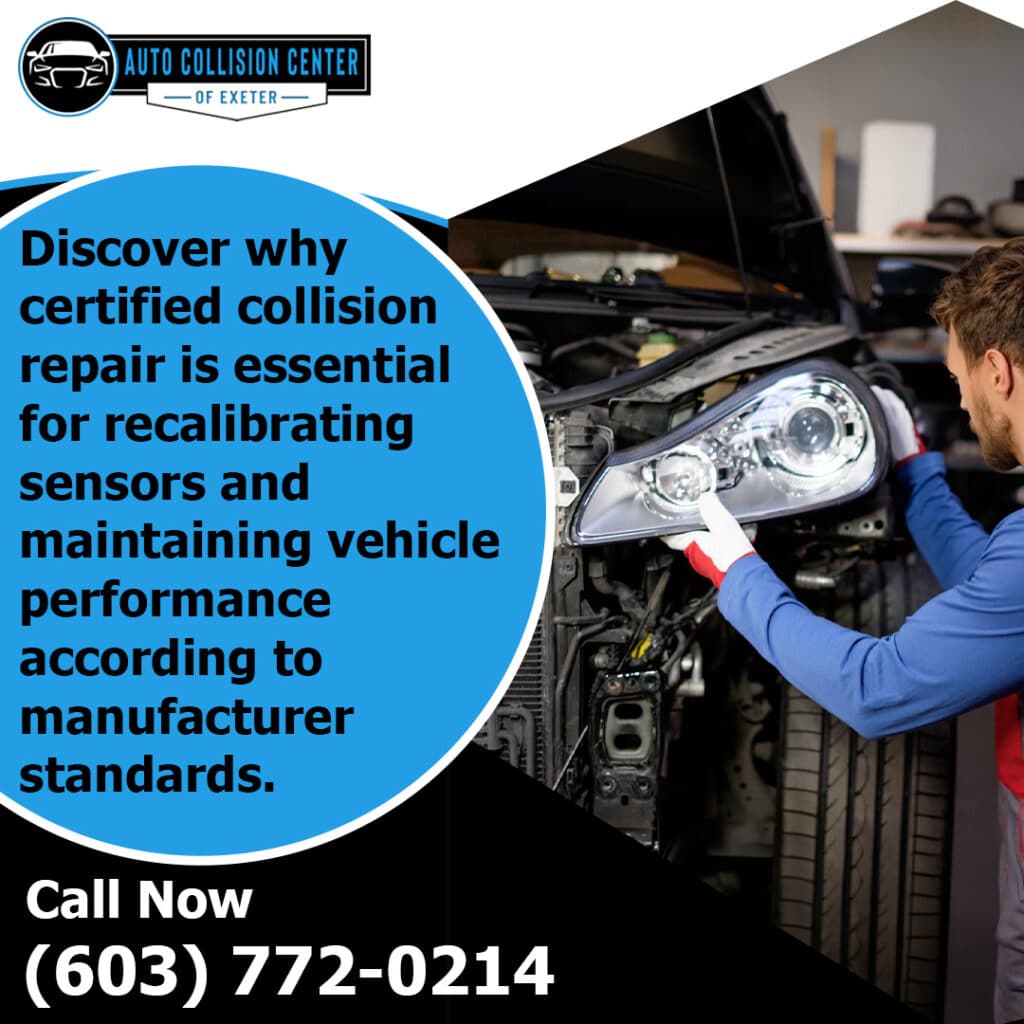
Not every shop operates at this level. Late-model vehicles carry automatic braking sensors, high-strength structural panels, and layered safety systems that all depend on proper repair. Repairing them correctly takes more than a visual check and paint. Knowing what certified repair involves helps you make a better decision after any accident. Knowing what to look for in a shop matters just as much.
What Is Certified Collision Repair?
Certified collision repair means we restore your vehicle using manufacturer-approved procedures, trained technicians, and equipment that meets current industry training standards.
It is not a marketing label. It reflects a documented process we follow and maintain over time, so your vehicle is repaired correctly and safely.
What “Certified” Actually Refers To
The most recognized certification in the industry is I-CAR Gold Class. I-CAR (Inter-Industry Conference on Auto Collision Repair) sets training benchmarks for repair facilities and individual technicians.
To maintain Gold Class status, we meet ongoing training requirements. Our technicians complete role-specific coursework and pass competency evaluations. This status must be renewed as vehicle technology continues to change.
Industry estimates indicate that roughly 20% of collision repair shops nationwide hold I-CAR Gold Class recognition. Technicians who complete advanced training earn I-CAR Platinum status. This is a technician-level credential that goes beyond the shop-level Gold Class designation and reflects deeper hands-on training.
How It Differs from Standard Car Collision Repair
Standard repair at a non-certified shop often focuses on visible damage. Panels are reshaped. Paint is applied. The vehicle may appear repaired at first glance.
With certified car collision repair, we address the full scope of damage. That includes structural alignment, system calibration, hidden component inspection, and proper parts selection. We treat the collision as something that affects your entire vehicle, not just the exterior.
Why Modern Vehicles Require Certified Repair
Today’s vehicles are built very differently from those made ten or fifteen years ago. When you need car collision repair, we rely on updated training and proper equipment to restore your vehicle correctly and safely.
Advanced Safety Systems Depend on Precision
Advanced Driver Assistance Systems (ADAS) are now standard on most newer vehicles. These systems include Automatic Emergency Braking, Forward Collision Warning, Lane Departure Warning, Blind Spot Monitoring, and Rear Cross-Traffic Alert.
These features depend on sensors, cameras, and radar components placed in impact areas such as bumpers, windshields, and rear panels. When those areas are affected, we inspect and recalibrate the systems so they function as designed.
A January 2025 PARTS study, operated by MITRE for NHTSA and automakers, showed vehicles with automatic emergency braking (AEB) had a 49% lower rate of front-to-rear crashes across model years 2015–2023. That level of protection depends on proper calibration after every repair.
| ADAS Feature | Common Mounting Location | Risk if Not Recalibrated |
| Automatic Emergency Braking | Front bumper/grille | May not detect vehicles ahead |
| Forward Collision Warning | Windshield/mirror area | Incorrect distance readings |
| Lane Departure Warning | Windshield camera | Misreads lane position |
| Blind Spot Monitoring | Rear bumper/quarter panel | Misses vehicles nearby |
Structural Integrity Is More Complex Today
Modern vehicles use high-strength steel and mixed materials that respond differently during a collision. We follow manufacturer procedures because improper repairs can reduce structural strength, even when damage is not visible after the repair.
The Risks of Choosing a Non-Certified Shop
When you choose a shop based only on price, your vehicle may not receive the repair it needs. With late-model vehicles, we often see issues that are not visible until something fails later.
Hidden Damage Can Be Missed
Collision damage rarely stops at the surface. A bumper impact can transfer force into the frame, mounting points, and internal structure. Without full disassembly and pre-repair diagnostic scans, that damage can go unnoticed.
We use scans to identify fault codes tied to airbags, braking systems, and electronic components. Skipping this step means starting repairs without a complete damage picture.
Safety Systems May Not Function Properly
Sensors require recalibration after any repair that affects their position. Without the right tools and process, this step may be missed or incomplete.
A miscalibrated ADAS system may not show obvious signs. Your vehicle may drive normally, but in a critical situation, those systems may not respond as expected.
Long-Term Vehicle Value Can Drop
Repairs that do not follow OEM procedures can reduce resale value. Proper documentation of certified work helps protect your investment.
The Repair Process at Auto Collision Center of Exeter
When you need auto collision repair in Exeter, NH, we follow a structured process from intake through final delivery so your vehicle is restored correctly.
Step 1: Full Vehicle Evaluation
Auto Collision Center of Exeter begins with a pre-repair diagnostic scan using Snap-On and Bosch tools. This helps us identify active and stored fault codes across your vehicle’s systems.
We also document the condition of your vehicle inside and out, capturing detailed images to support insurance review and accurate repair planning.
Step 2: Disassembly and Damage Analysis
We disassemble the damaged area to access structural components. What looks minor on the surface often involves more serious damage.
We measure the frame or unibody using laser measuring equipment to confirm it aligns within the manufacturer’s specifications. Any variation can affect safety and performance.
Step 3: OEM-Based Repairs
We source parts based on manufacturer requirements. OEM parts are preferred because they match your vehicle’s original design and safety standards.
When alternatives are required, we use verified suppliers. We follow approved repair methods for structural work and pre-fit all panels before refinishing.
Step 4: Reassembly and System Calibration
After reassembly, we complete a post-repair scan to confirm system performance. If needed, ADAS calibration is completed through qualified partners.
We complete a final road test to confirm braking, steering, and overall vehicle response before returning your vehicle.
Why OEM Procedures Matter in Certified Collision Repair
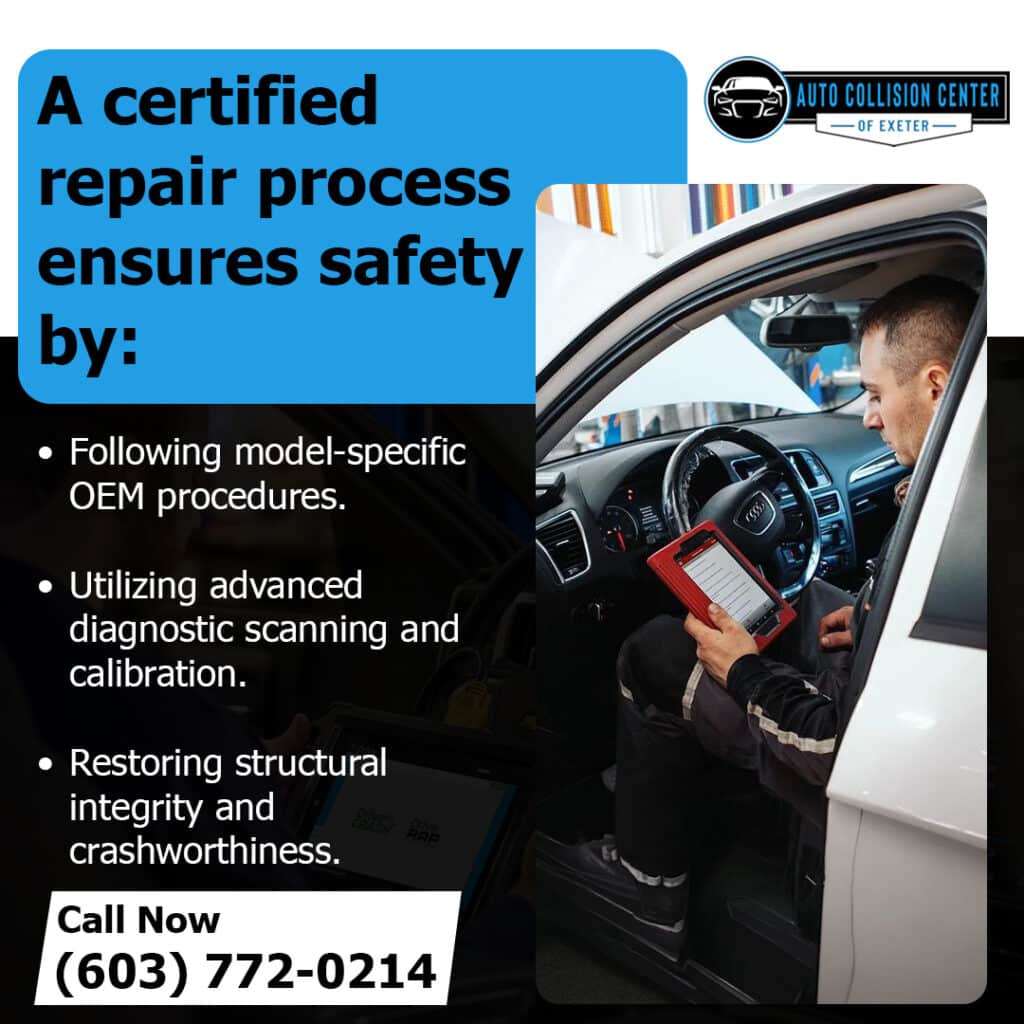
OEM stands for Original Equipment Manufacturer. Each automaker publishes detailed repair procedures based on the vehicle’s year, make, and model. These include welding methods, adhesive use, and torque specifications for critical components.
When we follow OEM procedures, your vehicle’s crashworthiness is preserved. Structural zones designed to absorb impact depend on the correct materials and repair methods. If those steps are not followed, your vehicle may not protect occupants the way it was designed to.
OEM-based repairs also help maintain manufacturer and extended warranty coverage. A vehicle that is not repaired to these standards may appear normal, but can perform differently in a future collision.
We use frame-measuring systems, approved welding equipment, and computerized paint matching to meet manufacturer requirements. We also select OEM or verified aftermarket parts based on your vehicle’s needs. This approach helps us complete certified collision repair that supports both safety and long-term vehicle value.
Is Certified Collision Repair Worth the Cost?
Certified repair may seem more expensive than lower-rate options at first. When you search for affordable collision repair, price can feel like the main factor. Long-term value changes that comparison.
Avoiding Repeat Repairs
When we repair your vehicle correctly the first time, you reduce the risk of repeat issues. Skipped diagnostics, improper procedures, or poor parts can lead to problems later. A proper repair helps your vehicle perform as it should.
Insurance and Proper Repairs
Most insurers recognize OEM repair procedures when they are properly documented. We handle claims communication and submit supplement requests when hidden damage is found. This supports the full scope of repairs your vehicle requires.
Our DRP relationships with State Farm, Geico, and Amica help streamline approvals. As a family-owned shop, we back our repairs and paint with a limited lifetime warranty for as long as you own your vehicle.
How to Identify a Certified Collision Repair Shop
Certifications to Look For
When you are choosing a repair shop, start by confirming certifications. We recommend checking whether a shop holds I-CAR Gold Class status, which you can verify through the I-CAR website. You should also ask if technicians hold individual I-CAR Platinum credentials.
These certifications serve different roles. Gold Class applies to the shop as a whole and reflects ongoing training requirements. Platinum status is earned by technicians through advanced coursework and testing. A shop may hold Gold Class even if only some technicians have Platinum certification.
Questions to Ask Before Choosing
Before scheduling car collision repair, ask clear questions about the repair process:
- Do you follow OEM procedures for my vehicle?
- Will you complete diagnostic scans before and after repairs?
- Are ADAS systems checked and recalibrated if needed?
- What parts will you use, and how are they sourced?
- Do you provide a warranty for the repairs?
When we answer these questions clearly and provide documentation, you know your vehicle is being repaired to a certified standard.
Why Certification Matters More as Vehicles Get More Complex
As vehicles become more complex, the difference between certified and non-certified repair is not always visible at first. Both shops may return a vehicle that looks repaired, but the real difference comes from the steps we take before refinishing begins.
Bryan Dinger, our general manager, brings more than twenty years of collision repair experience to every vehicle we handle. His training from Universal Technical Institute guides how we approach each repair, from the initial diagnostic scan through the final road test.
We follow structured, certified collision repair procedures on every job. Our process relies on proper measurements and documented steps, not guesswork.
Our team brings more than 50 years of combined experience in collision repair and refinishing. Each team member has a defined role, which helps us deliver consistent, accurate results for your vehicle every time.
Make the Right Choice with Certified Collision Repair at Auto Collision Center of Exeter
Modern vehicles rely on structural precision and sensor accuracy to protect you on the road. If repairs focus only on appearance, important safety systems may not function as they should.
With certified collision repair, we restore your vehicle’s safety systems, structural integrity, and long-term value using the right procedures and equipment. Not every shop follows those standards.
After an accident, take time to ask the right questions. Confirm that diagnostic scans and system calibration are part of the repair process before you move forward.
At Auto Collision Center of Exeter, we are here to help you make the right decision for your vehicle. Call us at (603) 772-0214 or send us an email at accofexeter@gmail.com to schedule your estimate for collision repair services in Exeter, NH.