Synopsis
Collision repair costs are determined by the actual structural, mechanical, and safety-related damage to your vehicle, not by how it looks after an accident. Understanding what drives your estimate helps you make informed decisions and avoid incomplete repairs.
Key Takeaways
- A vehicle’s appearance after a collision rarely reflects the full extent of damage
- Frame alignment, hidden component damage, and safety system faults all affect what a correct repair costs
- OEM procedures, quality parts, and I-CAR-trained technicians are behind accurate pricing
- A thorough inspection before any estimate protects you from unexpected costs later
- Our limited lifetime warranty covers all repairs and paint for as long as you own the vehicle
Auto accidents rarely come with a clear picture of what repairs will cost. You see a dented panel or a scuffed bumper, and assume the damage is straightforward. Then the estimate arrives, and the number does not match what you expected.
That gap between appearance and actual repair cost is one of the most common sources of confusion after a collision. It is also one of the most important things to understand before you choose a shop or approve a repair plan.
At Auto Collision Center of Exeter, we build every estimate around what the vehicle actually needs, not what the damage looks like from the outside. This means inspecting beneath the surface, measuring the structure, and scanning the vehicle’s safety systems before any repair decisions are made. What we find during that process is what drives the cost.
We explain the factors that determine what car collision repair actually involves, and why the appearance of the damage is rarely the full story.
Why Car Collision Repair Costs Can Surprise You
The cost of car collision repair is based on what is actually damaged, including components you cannot see from the outside.
Many vehicle owners expect a small dent or a bumped bumper to carry a small price tag. That assumption is understandable. What you see on the surface, though, is not always what the repair involves.
A rear bumper that looks barely touched may be concealing a cracked foam energy absorber, a bent reinforcement bar, and a displaced parking sensor. A door panel with a minor dent may sit over a rocker panel that shifted during the impact. That rocker panel requires structural correction before any body work can begin.
The inspection is what tells us what the repair actually requires. The surface is where we start looking, not where we stop.
Why Appearance Alone Cannot Predict Repair Cost
Modern vehicles are built with layered systems. The body panels you see cover structural components, electronic modules, and safety hardware that serve specific engineering functions.
When a collision occurs, energy transfers through those layers. Cosmetic damage and structural damage do not always match in severity. A high-speed glancing impact can produce dramatic surface damage with limited structural displacement. A low-speed direct hit can cause hidden frame misalignment with minimal visible damage to panels.
What determines the cost of car collision repair is the scope of damage to the vehicle’s structure, components, and safety systems, not the size of the dent.
Shops that estimate from appearance alone miss what lies beneath. That produces incomplete repairs, unexpected costs when hidden damage appears later, and in some cases, safety issues that only surface after the vehicle returns to the road.
What Actually Drives the Cost of a Collision Repair
Each cost element in a repair estimate ties directly to verified damage, not to a shop’s pricing preferences. Here is what those line items reflect.
Frame and Structural Correction
A vehicle’s frame or unibody structure is engineered to absorb and redirect collision forces. When that structure is displaced, it affects how the vehicle handles and how it protects occupants in a future impact.
Correcting structural misalignment requires precision measurement. We use a Spanesi frame measuring system and frame rack to confirm every dimension returns to manufacturer specifications. That work requires trained technicians, specialized equipment, and time. It is not a line item that can be skipped.
Hidden Damage Found During Disassembly
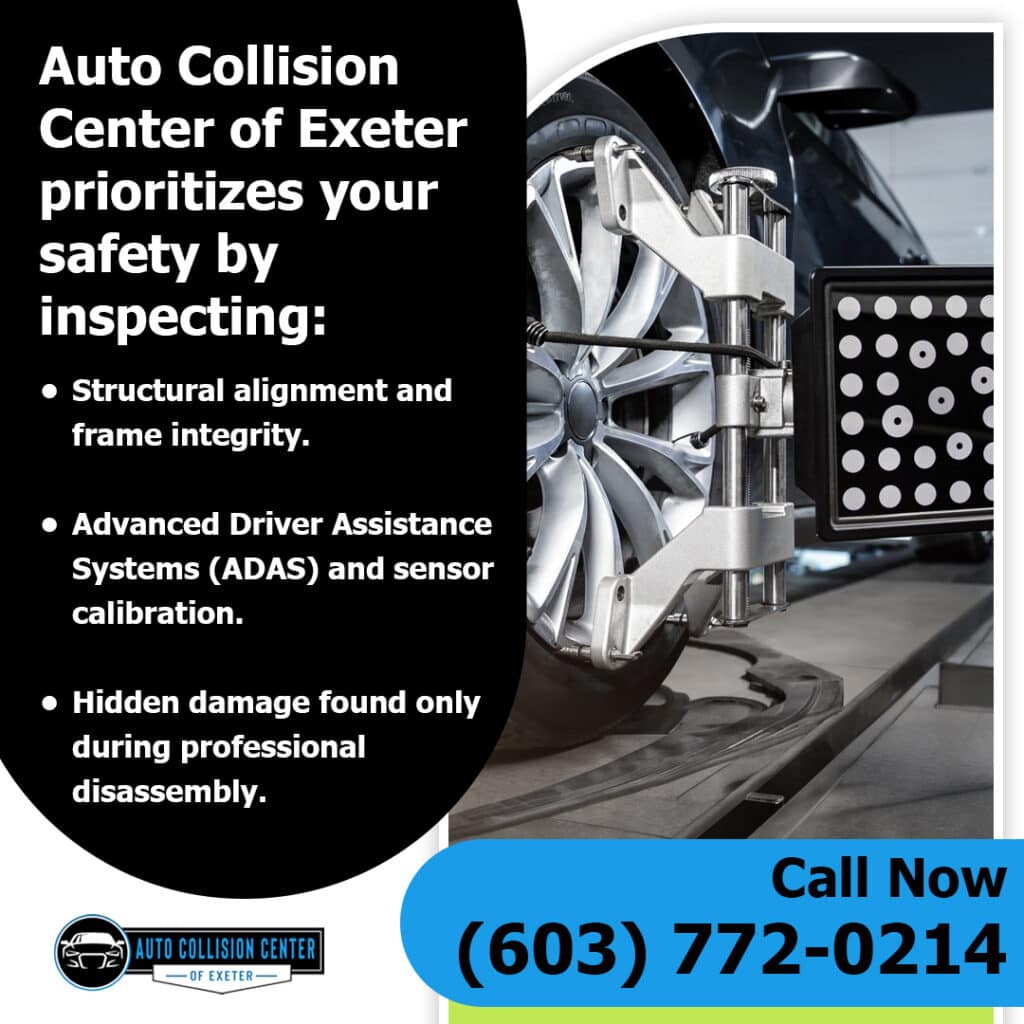
Our standard process includes disassembling the damaged area before the final estimate is confirmed. This step is where hidden damage becomes visible: cracked brackets, bent subcomponents, damaged wiring, and displaced hardware that did not appear in the initial inspection.
When disassembly reveals additional damage, we prepare a supplement and submit it to your insurer before any further work begins. You are kept informed at each stage. No additional repairs proceed without your knowledge and insurer approval. This process protects you from cost surprises and gives the repair an accurate, complete foundation.
Parts Selection
The parts specified in your estimate reflect what the vehicle actually requires. Our preference is always OEM (original equipment manufacturer) parts, because they are built to the exact safety and performance standards of your specific vehicle.
When your insurer requires aftermarket alternatives, we source from trusted, established suppliers only. We do not use parts from unverified vendors. Quality parts are not optional when the goal is returning a vehicle to pre-accident condition.
Labor and Repair Procedures
Labor cost reflects the procedures required to restore your vehicle correctly. Our technicians follow OEM repair procedures and I-CAR standards on every job. These are step-by-step specifications from vehicle manufacturers and the collision repair industry’s primary training organization.
Bryan Dinger, our general manager, brings more than a decade of auto collision repair experience to overseeing every repair. His training from the Universal Technical Institute backs that oversight. Procedures are followed precisely, not approximated.
How Safety Technology Affects What Repairs Involve
ADAS Components Require Attention After a Collision
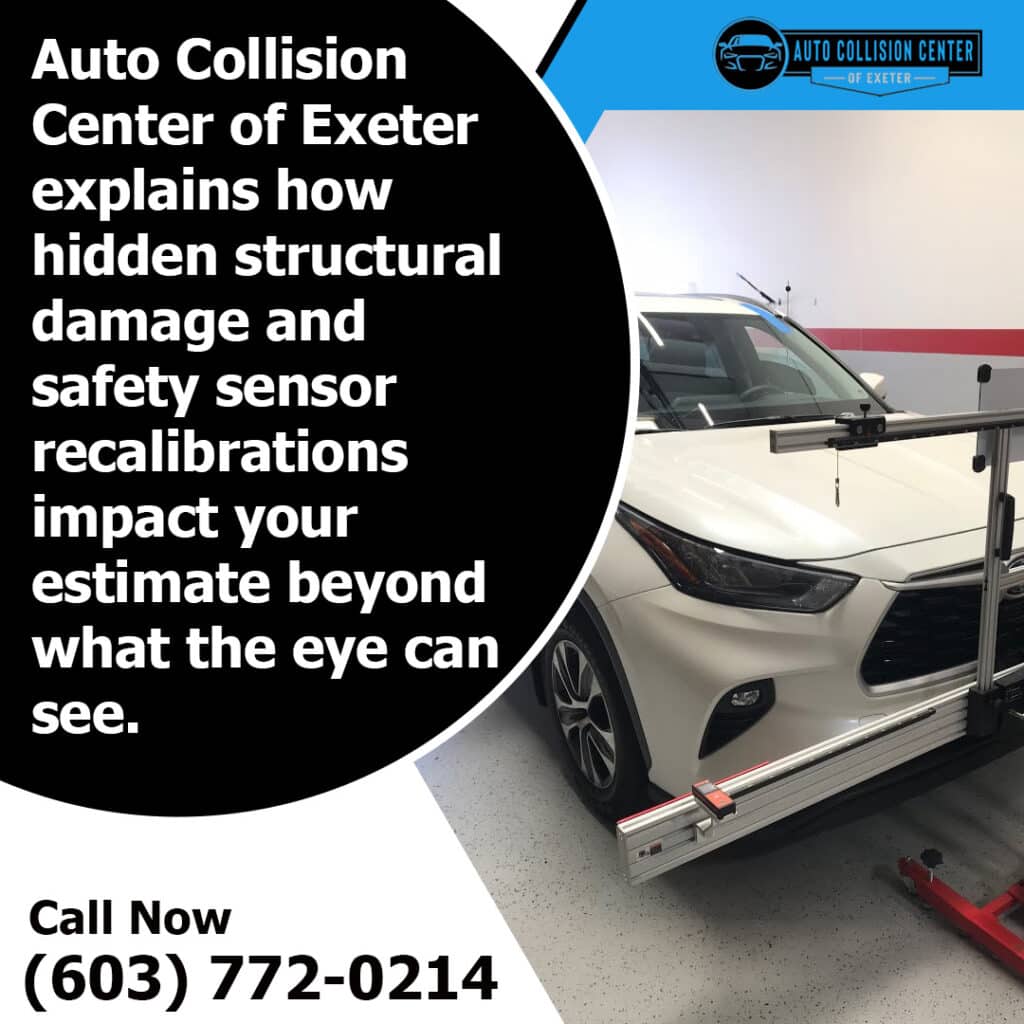
Advanced Driver Assistance Systems (ADAS) rely on cameras, radar sensors, and ultrasonic modules mounted in bumpers, mirrors, and windshields. These components power features like automatic emergency braking, lane departure alerts, and blind spot monitoring.
Any impact affecting those mounting locations can displace or damage these components. Once displaced, they no longer function within the tolerances required to protect you. Recalibration is a required step before the vehicle is road-safe, not an optional add-on. We coordinate ADAS recalibration through certified partners as part of the complete repair process.
Why Newer Vehicles Carry Greater Repair Complexity
Late-model vehicles carry far more electronic hardware than vehicles from even five to seven years ago. A minor rear-end impact on a current-model vehicle may involve a bumper-mounted radar unit, ultrasonic parking sensors, a backup camera, and a rearview display module. Each of those components requires inspection and potentially recalibration after the repair.
The safety benefit of that technology is substantial. A January 2025 study (an update to a prototype study released in November 2022) by the Partnership for Analytics Research in Traffic Safety (PARTS) found that vehicles equipped with Forward Collision Warning (FCW) and Automatic Emergency Braking (AEB) are involved in approximately 49% fewer front-to-rear crashes. It is the largest government-automaker ADAS effectiveness study conducted to date, covering 98 million vehicles across 168 models and 16 states.
| ADAS Feature | Crash Reduction | Model Years Studied |
| FCW + AEB combined | ~49% fewer front-to-rear crashes | 2015–2023 |
| AEB systems | 52% rear-end crash reduction | 2021–2023 |
| AEB systems | 46% rear-end crash reduction | 2015–2017 |
| Pedestrian AEB | 9% reduction in non-motorist crashes | 2015–2023 |
Source: PARTS Study, NHTSA/MITRE, January 2025.
That safety performance depends entirely on those systems being correctly calibrated after any repair that touches their mounting locations.
Why Certified Collision Repair Produces Accurate Estimates
I-CAR Gold Class is the highest shop-level recognition in the collision repair industry. Maintaining it requires ongoing training across every repair role, covering current vehicle materials, updated manufacturer procedures, and evolving safety system requirements. Auto Collision Center of Exeter holds I-CAR Gold Class certification as a shop. Our technicians hold I-CAR Platinum certification. That training directly shapes how damage is identified and how estimates are built.
Trained technicians know where to look for damage that less experienced hands may overlook. Accurate damage identification produces accurate estimates. Fewer items are missed at the outset, which means fewer supplements and fewer surprises as the repair progresses.
Following OEM and I-CAR procedures also affects labor cost in an honest way. These procedures specify exact repair sequences because modern vehicles require them to maintain structural integrity and safety system function after repairs. Shops that skip steps may produce lower estimates. The underlying damage remains the same.
Reading an Estimate: What “Affordable” Actually Means
A fair repair estimate reflects what the damage requires, neither more nor less.
The lowest estimate is not always the best one. A noticeably lower quote may indicate that damage was not fully assessed. It may also mean lower-grade parts will be used, or that specific repair steps will be omitted. Any of those decisions produces problems that appear later, sometimes at costs that exceed the original savings.
Affordable collision repair means getting an accurate estimate and using quality parts. It means following proper procedures and completing the job correctly the first time. That is where the value lies, not in a number that looks good before work begins.
We provide itemized estimates and walk you through every line. Our direct repair partnerships with State Farm, Geico, and Amica mean we work directly with those insurers on your behalf. We advocate for what your vehicle actually needs.
How Our Inspection Process Prevents Unexpected Costs
The sequence Auto Collision Center of Exeter follows before and during every repair is designed to give the estimate an accurate foundation from the start.
Pre-repair diagnostic scan: Every vehicle receives a scan using Snap-On and Bosch diagnostic tools before any work begins. This identifies active fault codes across airbag systems, braking, and ADAS components. Faults captured here are included in the repair scope, not discovered after reassembly.
Photographic documentation: We photograph the vehicle inside and out, capturing more than 100 images before disassembly begins. This record protects your interests and supports accurate insurance reporting.
Disassembly before finalizing the estimate: We open the damaged area fully before locking in the repair plan. Hidden damage is documented and photographed at each stage.
Supplement management: When disassembly reveals damage beyond the initial scope, we prepare and submit a supplement to your insurer. We wait for approval before continuing. You are not billed for work you did not authorize.
This sequence is what our collision repair services in Exeter, NH includes as standard practice, not as an upgrade.
Frequently Asked Questions
Why did my estimate increase after the shop started working on my car?
Additional damage found during disassembly is the most common reason. What looks limited on the surface often involves components that are only visible once the area is opened. We document everything found and submit a supplement to your insurer before proceeding. No work continues without approval.
Do I have a say in what parts are used on my vehicle?
Yes. We discuss part options before ordering. Our default is OEM parts. When your insurer requires aftermarket alternatives, we use trusted, established suppliers only. We never use unverified sources. The goal is always to return your vehicle to pre-accident condition and performance.
How do I know if a lower estimate is worth being concerned about?
Ask whether the shop performs a pre-repair diagnostic scan, whether they disassemble before finalizing the scope, and which parts suppliers they use. A thorough process produces a complete estimate. A low figure without clear answers behind it warrants a closer look.
Collision Repair Cost Follows the Damage, Not the Dent
Auto collision repair costs reflect what is actually damaged, what is required to correct it, and what parts and procedures produce a lasting, safe result. That is not a formula that changes based on how the vehicle looks when it arrives.
Understanding your estimate, what each line item covers, and why it is there, puts you in a much better position to make decisions after an accident.
Auto Collision Center of Exeter documents every step, explains every charge, and backs all repairs and paint work with a limited lifetime warranty for as long as you own the vehicle. Our team brings more than fifty years of combined experience to every job, guided by I-CAR Gold Class certification and Bryan Dinger’s more than a decade of hands-on oversight.
Call us at (603) 772-0214 or email accofexeter@gmail.com for certified collision repair in Exeter, NH by our skilled technicians. We are at 58 Winter Street in Exeter, NH, and serve drivers throughout the New Hampshire Seacoast region, including North Hampton, Portsmouth, and surrounding communities.