
Synopsis
Not all collision damage is the same. Cosmetic damage affects how your vehicle looks, while structural damage affects how it holds together, handles, and protects you.
Key Takeaways
- Cosmetic damage covers paint, surface scratches, and minor dents that do not affect safety systems
- Structural damage involves the frame, crumple zones, and unibody components that determine crash performance
- The damage type determines repair approach, timeline, and whether to file an insurance claim
- A professional assessment is the only reliable way to know the type of damage your vehicle has
After a collision, the damage you see is not always the damage you have. A scuffed bumper cover may look cosmetic while concealing a cracked reinforcement bar. A door with visible dents may look alarming while the underlying structure is intact. That gap between appearance and reality is where costly repair decisions go wrong.
Knowing whether your vehicle has cosmetic or structural damage, or both, determines the repair approach, the timeline, and whether to file a claim. These distinctions affect your safety, your vehicle’s resale value, and what you pay.

At Auto Collision Center of Exeter, our team brings 50 years of combined experience to every vehicle. When you schedule auto body damage repair in Exeter, NH, we evaluate what you can see and what the structure tells us. We explain what we find before any repair decision is made.
Bryan Dinger, our general manager, combines extensive collision repair industry experience with formal training at Universal Technical Institute. That background shapes how we approach every job, from a paint chip to a frame correction.
What Is Cosmetic Auto Body Damage?
Cosmetic damage generally affects appearance without directly compromising structural integrity or primary safety systems. It is real damage worth addressing, but it does not change how the vehicle drives or how well it protects you in a subsequent accident.
Common Types of Cosmetic Damage
The most frequently seen cosmetic damage includes:
- Paint scratches that have not cut through the primer layer
- Paint chips and scuffs on panels or bumper covers
- Minor surface dents from door strikes, hail, or parking lot contact
- Scuffed or lightly scraped bumper covers with no underlying deformation
These are the types of damage you can typically see clearly and describe in full. They do not affect steering, braking, or any safety system. However, they are not consequence-free.
Why Cosmetic Damage Still Deserves Attention
Unrepaired cosmetic damage affects your vehicle in two ways.
The first is corrosion. Paint and primer seal the metal underneath. When a chip or scratch breaks through to bare metal, moisture and road salt work on that surface immediately. In New Hampshire, where road salting typically runs from November through April, a small chip left unaddressed across a single winter can develop into rust beneath the surrounding paint. Once rust spreads under a panel, the repair becomes structural rather than cosmetic.
The second is resale value. Buyers and appraisers factor paint condition and panel appearance into valuations. Structural repairs are documented in vehicle history reports. Cosmetic repairs done correctly preserve your vehicle’s appearance and do not raise the structural or safety concerns that buyers and lenders look for when reviewing a vehicle’s history.
What Is Structural Auto Body Damage?
Structural damage affects the parts of your vehicle that control alignment, crash protection, and overall driving behavior. This type of damage impacts safety and cannot be confirmed by visual inspection alone.
What Structural Damage Involves
Most modern vehicles use a unibody design, where the body and frame function as one structure. During a collision, crumple zones absorb impact energy and direct force through specific areas to help protect occupants.
Structural damage occurs when key components are affected, including:
- Frame rails or unibody sections are designed to absorb impact
- Mounting points for suspension, steering, or subframes
- Pillars that support the roof and door openings
- Crumple zones that have already compressed during a collision
When this structure changes, the vehicle may not perform as intended. Steering can feel uneven. Tires may wear faster than expected. Crash protection is reduced because damaged zones cannot absorb impact energy the same way again.
Why Structural Damage and Repair Timelines Differ
Structural repairs take longer because each step must be precise. We measure the vehicle, correct the structure, and verify it again before any refinishing begins. If needed, we also help coordinate a rental vehicle through your insurance during repairs.
Cosmetic vs Structural Damage: A Practical Comparison
The table below outlines the key differences between cosmetic and structural auto body damage. These distinctions help you better understand what your vehicle may require after auto body damage repair in Exeter, NH.
| Factor | Cosmetic Damage | Structural Damage |
| Visible from the outside | Usually yes | Often no |
| Affects driving behavior | No | Yes: steering, handling, tire wear |
| Affects crash protection | No | Yes: crumple zones, airbag geometry |
| Appears in vehicle history | No (if cosmetic-only) | Yes: documented structural repair |
| Repair timeline | Days | Weeks |
| Requires frame measurement | No | Yes |
| Insurance claim recommended | Depends on cost vs deductible | Yes |
Vehicle history plays a larger role than most drivers expect. When structural repairs are documented, they become part of your vehicle’s record. We follow OEM repair procedures to support safe results and long-term value.
How the Difference Affects Your Insurance Decision
Whether you file an insurance claim often depends on the type and extent of damage. Cosmetic damage below your deductible is often handled out of pocket. Filing a claim for a small scratch or minor dent may not always make sense when compared to the repair scope. We review these situations with you before any work begins.
Structural damage typically requires a claim. Frame measurement, disassembly, structural correction, and reassembly increase the complexity and cost of repairs. Filing a claim also helps document the repair, which can matter for resale and vehicle history records.
When you bring your vehicle in for auto body damage repair, we walk you through your options. As a certified auto body shop in Exeter, NH, we work with insurers such as State Farm, Geico, and Amica to help keep the process straightforward.
Why the Two Types Are Easy to Confuse
Cosmetic and structural damage often appear together, and structural issues may not show on the surface at all. A rear bumper cover can show a clean scrape while the reinforcement bar behind it is cracked, or a sensor has shifted. The outer panel looks cosmetic, but the damage underneath is structural.
The reverse also happens. A door with visible dents may appear severe, yet the underlying structure remains intact. In that case, the repair is cosmetic, and the timeline is shorter. These situations are common after collisions and often lead to incorrect assumptions about what your vehicle actually needs.
You cannot determine damage type from appearance alone. Proper evaluation requires disassembly and measurement to identify what is affected before starting auto body damage repair.
What Each Damage Type Means for How the Shop Works
Cosmetic and structural repairs follow different sequences at an auto body repair shop, and those steps must be completed in the correct order to avoid future issues.
For Cosmetic Damage
Paint refinishing depends on preparation. We clean the surface, apply primer, base coat, and clear coat, then complete any polishing needed. Our color-matching system accounts for factory variation and fading so the finish blends with surrounding panels instead of standing out.
For Structural Damage
Structural repair begins with measurement. We use frame measuring equipment to compare your vehicle’s dimensions with manufacturer specifications. Adjustments are made before any panel or paint work begins, then verified again. Auto Collision Center of Exeter follows OEM repair procedures and uses approved parts. When calibration is required after structural work, we coordinate those services to help restore proper system function and driving performance.
Can Cosmetic Damage Become a Structural Problem?
Yes. The progression is gradual but real, and it often accelerates in northern New England climates. When paint or primer is damaged, bare metal becomes exposed. Road salt used across New Hampshire from late fall through early spring is highly corrosive to steel. Rust begins at the surface and spreads beneath the surrounding paint. Once corrosion reaches a structural panel, door sill, or frame rail, the repair moves beyond cosmetic concerns. Addressing visible damage early helps prevent more extensive car body repairs later, especially when corrosion begins to affect structural components.
How to Read Your Vehicle After a Collision
Before visiting a shop, there are a few things you can observe. These are not diagnostic steps, but they give us useful context about what your vehicle may be experiencing after a collision.
Check panel alignment. Look closely at the gaps between panels, such as doors, fenders, and the trunk. Uneven spacing may point to structural movement that needs further evaluation.
Notice how doors close. If a door requires more force, makes a new sound, or feels loose, it may indicate shifting in surrounding components.
Watch for warning lights. Airbag, ABS, or stability control alerts after a collision often mean those systems need scanning to confirm proper operation.
Pay attention while driving. New vibration, pulling, or unusual noise can signal hidden damage that requires a closer inspection.
Choosing the Right Shop for Either Type of Repair
The shop you choose plays a different role depending on the damage type.
For cosmetic repairs, focus on material quality, color matching, and proper surface preparation. Skipping steps can lead to early paint failure.
For structural repairs, look for proper frame measuring equipment, OEM repair procedures, and trained technicians. Accurate documentation also supports insurance claims and helps protect resale value.
We maintain I-CAR Gold Class standards, with Platinum-certified technicians performing repairs. When searching for an auto body shop near you, choosing a team that identifies all damage is key to proper auto body damage repair.
Is Affordable Auto Body Repair the Same as a Low Price?
Not always. Affordable auto body repair means paying for the correct scope of work, without skipping steps that affect long-term results. A low estimate based only on a visual inspection of structural damage is often incomplete. Hidden issues found during disassembly still need to be addressed, and that can change the final repair plan.
When damage is not fully identified early, the repair process may require additional approvals or adjustments. That can delay progress and create confusion about costs.
We base our estimates on a thorough evaluation, so you understand what your vehicle needs before repairs begin. This approach enables us to provide accurate car body repair in Exeter, NH, and helps avoid surprises later. We stand behind our work with a limited lifetime warranty on repairs and paint for as long as you own your vehicle.
Frequently Asked Questions
Can a small dent hide structural damage?
Yes, small dents can hide more serious damage. Impact force can affect components behind panels, which is why we inspect beyond what is visible.
Do I need an inspection if the damage looks cosmetic?
Yes, even minor damage should be checked. What looks cosmetic can sometimes involve hidden structural issues that need proper evaluation.
How do I choose the right auto body shop after a collision?
Look for a shop that focuses on accurate diagnosis and proper repairs. When searching for an auto body shop near you, choose one with trained technicians and the right equipment.
The Distinction That Guides Every Repair Decision
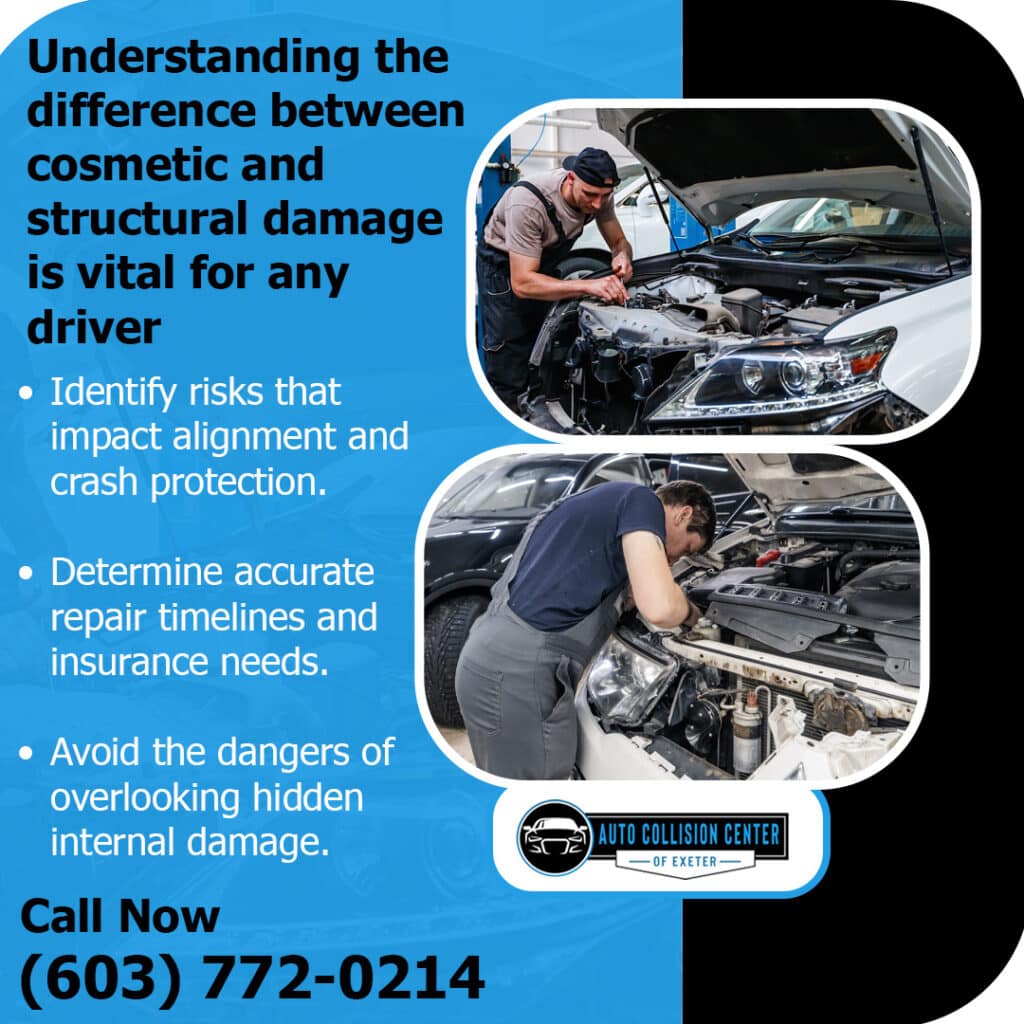
Cosmetic and structural damage require different responses, repair methods, and discussions with your insurance provider. The difference directly affects how your vehicle is restored and how it performs after repairs. The only reliable way to know what type of damage you have is through a proper assessment using the right tools and training.
At Auto Collision Center of Exeter, we evaluate every vehicle carefully before any repair decision is made. We look beyond visible damage to identify underlying issues and explain what we find, what it means, and what the correct repair process involves. Our meticulous auto body damage repair in Exeter, NH, avoids missed damage.
Get an Accurate Damage Assessment in Exeter, NH
Do not rely on appearance alone when deciding your next step. Cosmetic damage can hide structural problems, and structural damage may not be visible at all.
We serve Exeter, NH, and nearby Seacoast communities. All repairs are backed by our limited lifetime warranty. Contact Auto Collision Center of Exeter at (603) 772-0214 or email accofexeter@gmail.com to schedule your assessment.