
Synopsis
Auto Collision Center of Exeter explains how a complete auto body repair plan restores late-model vehicles beyond surface fixes, focusing on structure, safety systems, and long-term performance after a collision.
Key Takeaways
- Late-model vehicles require structured repair planning, not cosmetic fixes
- Hidden damage is identified through evaluation, scanning, and disassembly
- Structural accuracy protects safety systems and drivability
- Proper refinishing and reassembly support long-term vehicle value
- Verification and documentation confirm repairs meet factory standards
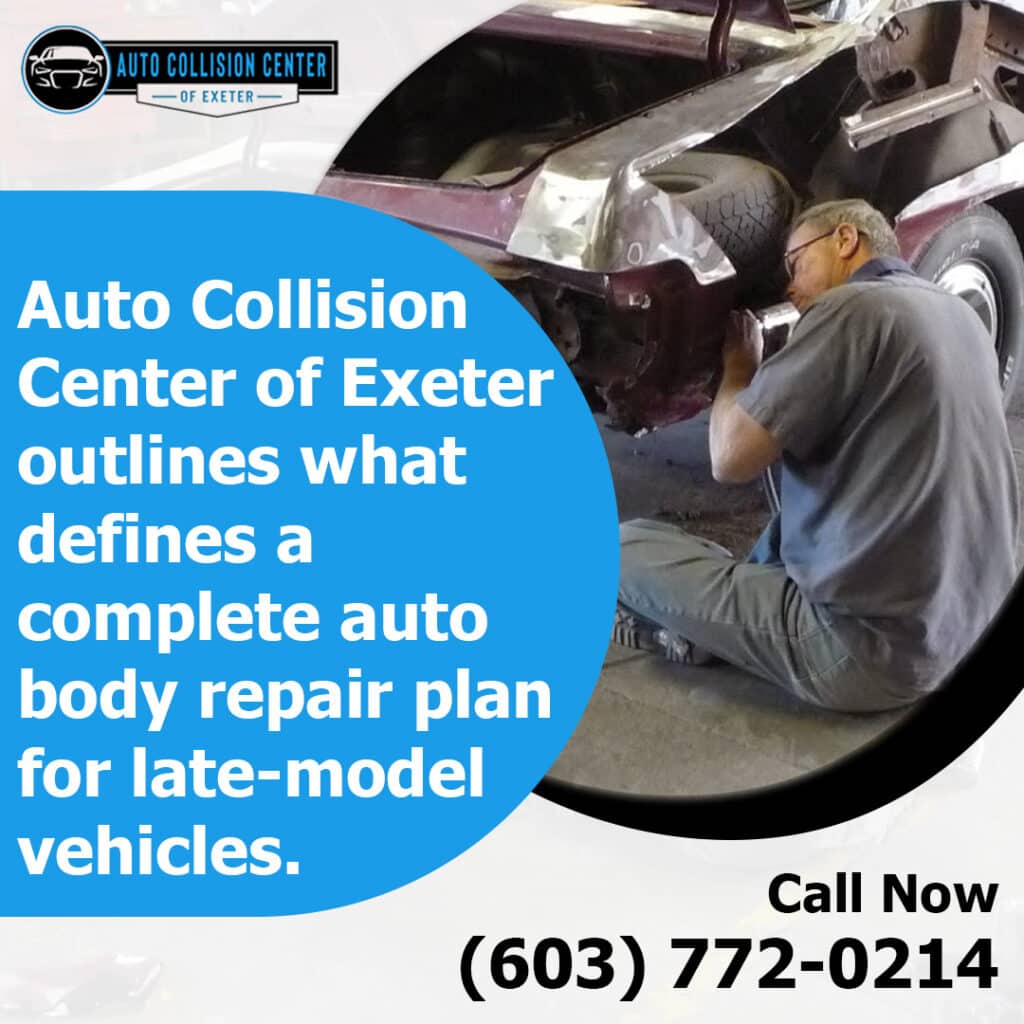
A complete auto body repair plan is a documented process that restores structure, safety systems, and exterior panels so a late-model vehicle drives and performs as intended after a collision. It goes beyond surface fixes. It addresses hidden damage, alignment, and system verification before the vehicle returns to daily use.
Not all body shops treat vehicles with the care and precision they deserve. Auto Collision Center of Exeter provides auto body repair in Exeter, NH, focusing on quality, safety, and customer care. We know that late-model vehicles demand planning, not guesswork. Let us explain what a full repair plan involves and why it matters for safety, value, and long-term ownership.
Why Late-Model Vehicles Require a Structured Auto Body Repair Plan
Modern vehicles differ dramatically from older models. Advanced construction methods, specialized materials, and integrated safety technologies create repair challenges that surface-level work cannot address. A professional auto body repair shop must account for these complexities through structured planning.
Late-model vehicles contain dozens of sensors, cameras, and modules that interact with body panels and frame sections. According to the National Highway Traffic Safety Administration analysis, human factors are identified as the critical reason in around 94% of crashes, meaning driver actions often appear as the final event in a crash sequence, though this does not alone explain the full cause of crashes. Advanced driver assistance features such as forward collision warning and automatic emergency braking have been shown to reduce certain crash types (e.g., front‑to‑rear) by ~40‑50% when properly calibrated. Proper repair planning accounts for how body damage affects these integrated systems.
Structural Complexity in Modern Vehicle Design
Manufacturers use unibody construction that distributes impact forces across interconnected zones. High-strength steel and aluminum panels form precise load paths engineered to protect occupants.
These materials demand specific repair planning:
- High-strength steel requires specialized welding techniques
- Aluminum panels need dedicated tools and contamination-free environments
- Mixed-material construction demands manufacturer-approved methods
Body panel tolerances are measured in millimeters. Misalignment of 2-3mm can prevent proper door operation or interfere with the safety system function. A complete repair plan addresses these specifications before work begins.
What “Complete Auto Body Repair” Actually Means
Complete auto body repair restores your vehicle to factory specifications across all affected systems. This differs from partial repairs that address visible damage while leaving structural issues unresolved.
A detailed repair plan establishes the full scope before work begins, preventing surprises and incomplete restoration. Our process for car body repair in Exeter, NH includes:
- Structural measurements and verification
- Safety system diagnostics
- Paint refinishing with factory-matched materials
- Coordination of specialized services when needed
- Documentation for insurance and ownership records
Many auto body repair shops offer cosmetic fixes, but complete restoration requires systematic planning that addresses every damaged system.
Step One: Initial Evaluation and Damage Documentation
Evaluation drives every decision that follows. We begin with a systematic inspection that identifies all affected areas. This first step separates complete car body repair from surface-level fixes.
Our technicians examine body panels, frame sections, door gaps, and trunk alignment. Late-model damage patterns often mislead observers. What appears as a bumper impact frequently extends into crash bars, sensor brackets, and frame horns.
Pre-repair scanning detects active fault codes in safety modules, airbag systems, and stability control. Our Snap-On and Bosch diagnostic equipment reads manufacturer-specific codes that generic scanners miss. We photograph your vehicle from multiple angles, capturing over 100 images that document pre-existing conditions and collision-related damage.
This documentation protects you during insurance claims and establishes baseline conditions for the quality auto body repair services we deliver in Exeter, NH.
Step Two: Disassembly and Identification of Hidden Damage
Complete repair plans depend on disassembly. Removing damaged panels reveals the full extent of structural impact. This step proves critical for our accurate auto body repair in Exeter, NH, that customers can trust. Frame deformation, cracked welds, and compromised crumple zones hide behind intact exterior panels.
We disassemble the affected sections methodically. Bumper covers are removed to inspect the crash bars. Fenders are detached to access frame rails. Our Spanesi frame measuring system verifies structural dimensions against manufacturer specifications during this phase.
Insurance adjusters cannot assess hidden damage during initial estimates. We document supplemental findings, submit them for approval, and update your repair plan accordingly.
Step Three: Structural and Body Repairs That Restore Integrity
Structural repairs form the foundation of complete restoration. This phase represents the core of professional auto body repair for late-model vehicles.
Panel Repair vs Panel Replacement Decisions
Some panels accept repair through specialized bodywork techniques. Others require complete replacement to maintain safety standards. We assess each panel individually based on damage severity and location.
Minor dents in accessible areas can be addressed through traditional metalwork when the metal thickness remains adequate. However, creased panels with stretched metal require replacement. The metal loses structural strength when stretched beyond specific limits. Panels that have been bent, stretched, or that affect safety components (including ADAS sensors) should be replaced per OEM structural repair guidelines. Welding or reshaping these parts can compromise integrity and safety.
Frame and Unibody Corrections
Our Spanesi frame equipment pulls damaged sections back to factory measurements. Using laser‑based frame measurement, technicians aim to restore structural dimensions to manufacturer‑specified tolerances (often within a few millimeters, varying by model). Precise measurement helps avoid issues such as uneven suspension, misaligned doors, and safety sensor errors. This precision separates the quality car body repair in Exeter, NH that we provide from approximation-based repairs.
Incomplete frame corrections create long-term problems. Tires wear unevenly due to misaligned suspension mounting points. Doors sag over time when hinge locations shift. Safety systems may malfunction due to sensor misalignment.
| Measurement Point | OEM Tolerance | Deviation Impact |
| Front suspension mounts | ±1-3mm | Suspension misalignment, uneven tire wear |
| Door hinges | ±2-3mm | Doors sag, bind, or misalign |
| Quarter panel gaps | ±3mm | Water intrusion, wind noise |
| Sensor brackets | ±1-2mm | ADAS/safety system failure |
Step Four: Refinishing and Paint Accuracy for Late-Model Vehicles
Refinishing completes the visible restoration while protecting repaired sections from corrosion. Paint work on late-model vehicles requires precise color matching and proper application techniques for professional auto body repair.
Our RM computerized color-matching system accounts for factory paint variations and weathering. We analyze your specific vehicle’s color rather than relying on manufacturer paint codes alone.
Modern basecoat-clearcoat systems need controlled temperature and humidity during application. Our heated downdraft booth maintains ideal conditions for proper paint cure. Protective coatings on aluminum panels prevent galvanic corrosion. Quality refinishing preserves resale value by maintaining factory appearance standards.
Step Five: Reassembly, System Verification, and Final Checks
Reassembly requires the same attention to detail as disassembly. Every fastener, clip, and seal returns to its specified position. This final phase validates that your auto body repair in Exeter, NH, by Auto Collision Center of Exeter, meets factory standards.
Torque specifications matter for structural fasteners. Under-tightened bolts allow movement that creates noise. Over-tightened fasteners crack mounting points. We follow manufacturer procedures for every connection. Weather seals are installed in specific orientations to prevent water leaks.
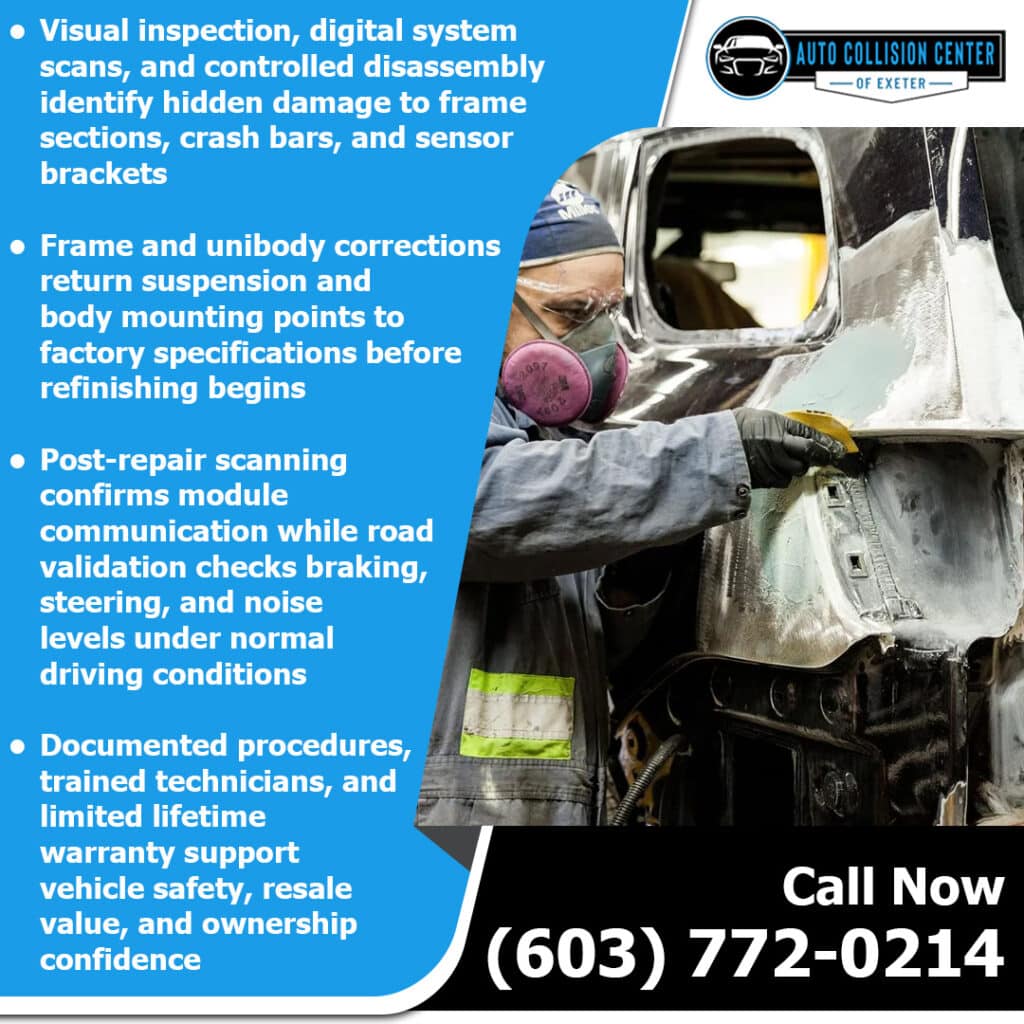
Post-repair scanning verifies that vehicle systems operate correctly. We clear collision-related codes and confirm that safety modules communicate properly. For vehicles with advanced driver assistance systems, we coordinate recalibration through certified partners using specialized targeting equipment.
Road testing validates real-world function. We check steering response, brake operation, and noise levels during test drives. These final verifications confirm that your vehicle operates as the manufacturer intended.
How a Complete Repair Plan Protects Long-Term Vehicle Value
Systematic repairs maintain vehicle history integrity. Proper documentation shows future buyers that collision damage received professional attention. Complete restoration prevents recurring issues that erode value over time.
Vehicles with structural shortcuts develop problems evident during pre-purchase inspections. Uneven tire wear indicates frame misalignment. Door alignment issues reveal incomplete structural repairs.
Our I-CAR Gold Class certification and systematic approach deliver Exeter, NH auto body repair services that maintain vehicle value. Bryan Dinger, our general manager, brings more than twenty years of auto collision repair experience to oversee quality standards. Our limited lifetime warranty covers all repairs for as long as you own your vehicle.
Why Choosing the Right Auto Body Repair Shop Matters
Shop selection determines repair quality and ownership outcomes. The difference between adequate and excellent car body repair starts with choosing a facility that follows manufacturer procedures.
I-CAR Gold Class certification indicates ongoing training and industry compliance. Our team’s combined 50 years of experience guide every repair decision. We understand how different vehicles respond to collision forces, preventing common mistakes that create long-term problems.
Transparent communication keeps you informed throughout the auto body repair process. We explain findings, discuss options, and provide realistic timelines. Our warranty coverage demonstrates confidence in our procedures and materials.
What Drivers in Exeter, NH Should Expect From Professional Auto Body Repair
Local expertise matters when addressing collision damage. New Hampshire weather patterns create specific challenges for auto body repair in Exeter, NH. Our 5,000 square foot facility at 58 Winter Street provides a controlled environment for year-round quality work.
Winter salt exposure accelerates corrosion in damaged areas. We treat exposed metal immediately to prevent rust formation. Our heated booth maintains ideal paint application conditions regardless of seasonal temperature swings, protecting your repair quality year-round.
Here is what a Google review said about Auto Collision Center of Exeter: “I am very pleased with my entire experience. The estimate and body work were done promptly and with the utmost professionalism throughout. I was informed during every step of the process and could not be happier with the result! I highly recommend this shop for any repair needs!”
Frequently Asked Questions
How long does a complete auto body repair take?
Timeline depends on damage severity, parts availability, and insurance response. Minor repairs take 3-5 days. Moderate damage involving the framework requires 7-10 days. Extensive repairs with multiple panels and system coordination may need 2-3 weeks. We provide realistic estimates upfront and update you when circumstances change.
Will my insurance cover a complete repair plan?
Most policies cover necessary repairs to restore the pre-accident condition. We work directly with insurance companies to document all damage. Our detailed estimates show why each repair step matters for proper auto body repair in Exeter, NH.
How do I know the repair plan is accurate?
We photograph and measure all damage. Diagnostic scans document system faults. Frame measurements verify structural position. You receive copies of all findings.
Planning Makes the Difference Between a Repair and a Restoration
Complete auto body repair planning separates surface fixes from proper restoration. Late-model vehicles demand systematic approaches that address structural integrity, safety systems, and long-term performance. We combine I-CAR certified training with manufacturer-approved equipment to deliver repairs that protect your investment.
If you are in Exeter, NH, auto body services you can rely on are available at Auto Collision Center of Exeter. Contact us at (603) 772-0214 or email us at accofexeter@gmail.com. We provide detailed evaluations and transparent repair plans that restore your vehicle correctly. Our team handles insurance coordination, rental arrangements, and all aspects of the restoration process while keeping you informed at every step.