Auto body repairs affect more than looks. Cameras, radar, and other ADAS sensors often sit inside bumpers, mirrors, and windshields. Panel alignment during repair changes how well these systems protect you on the road. At Auto Collision Center of Exeter, we document sensor-adjacent panel positions during auto body damage repair in Exeter, NH. We coordinate calibration through certified partners.
Key Takeaways
- ADAS lives in body panels: Front cameras sit near the windshield. Radar modules mount low on the front bumper. Blind-spot sensors sit in the mirrors. Auto body repair shop work in these areas can shift accuracy.
- A federal rule applies: NHTSA’s 2024 FMVSS No. 127 requires automatic emergency braking on nearly all new passenger cars and light trucks (up to 10,000 lb GVWR) by September 1, 2029, including pedestrian detection. NHTSA estimates the rule will prevent at least 360 deaths annually.
- Documentation protects the outcome: We record panel and sensor positions during teardown, so nothing gets missed before parts are ordered.
Which Body Panels Commonly Hold ADAS Sensors?
In vehicles we repair at Auto Collision Center of Exeter, ADAS relies on a forward-facing camera near the windshield. Radar usually sits behind the front bumper. Sensors are often built into the side mirrors or rear bumper. When a repair touches these parts on your vehicle, the attached sensors can shift out of factory position. This can happen even if the part looks correctly installed. So when you are choosing an auto body repair shop, ask about sensor documentation, not just price.
Why Panel Position Changes Sensor Accuracy
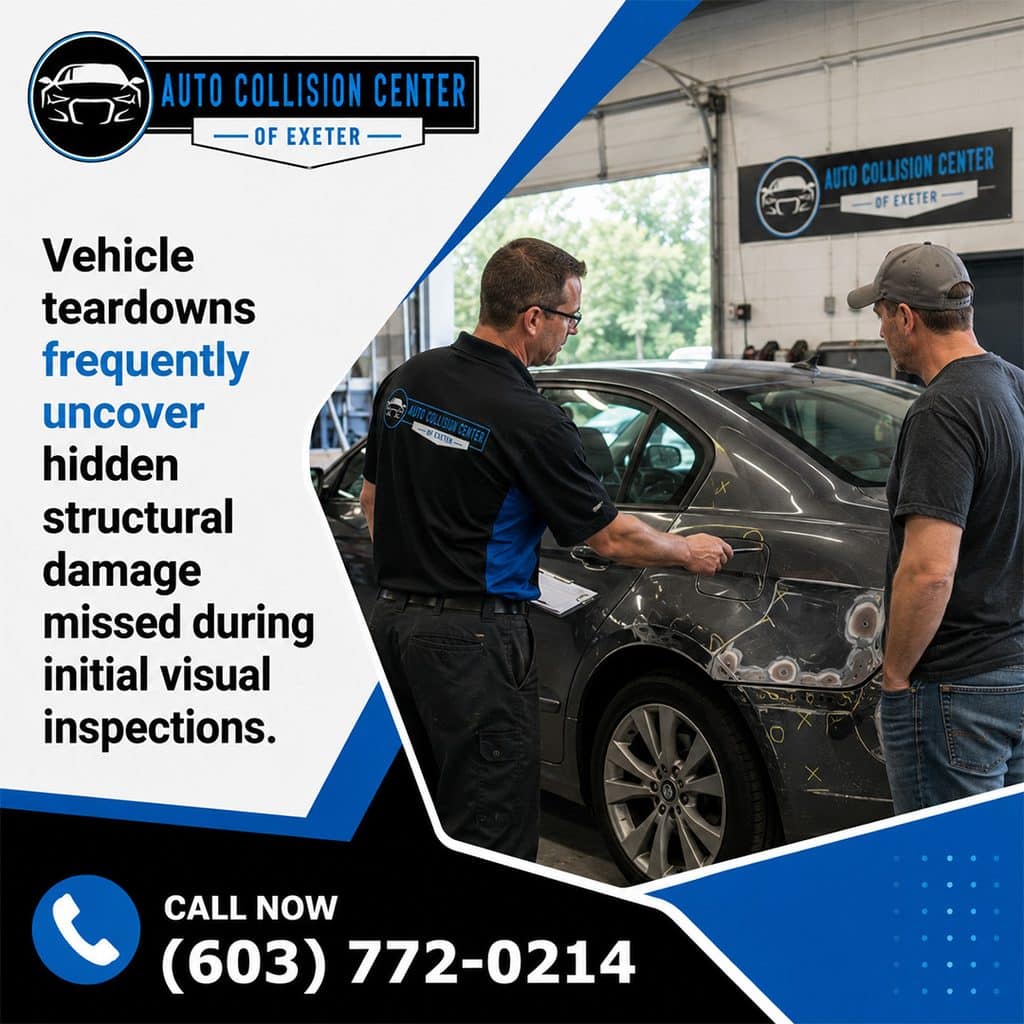
We photograph close to 100 reference points before disassembly starts. We then use Spanesi laser measuring equipment to confirm frame and panel position against OEM specifications. Bumper covers, radiator supports, and windshield frames can shift by a fraction of an inch after a collision. That small shift can misalign a radar unit or camera. A car can look finished and still have a camera aimed a few degrees off center. Structural repair that skips this documentation carries that risk forward.
| Repair Step | Without Documented Alignment | With Documented Alignment |
| Camera aim | Can sit off by several degrees | Positioned to OEM tolerance before reassembly |
| Radar coverage | Detection zone can shift | Panel position confirmed with laser measuring |
| Calibration outcome | Higher risk of a failed calibration attempt | Coordinated with a certified calibration partner |
What Steps Protect ADAS Function During Auto Body Repair?
As a certified auto body shop in Exeter, NH, our process gives your late-model vehicle a documented path:
- Photo documentation: Close to 100 photos capture the vehicle’s interior and exterior condition.
- Pre-scan: Snap-On and Bosch diagnostic tools check for fault codes tied to safety systems.
- Laser measuring: Spanesi equipment checks frame and panel dimensions before parts are ordered.
- Coordinated calibration: Once structural work is done, we coordinate calibration through a certified partner and confirm results with a post-scan.
Calibration itself happens off-site with a certified partner. Our role is to catch the need early during teardown and confirm the result once the vehicle comes back. Our General Manager, Bryan Dinger, brings more than twenty years of collision repair experience and Universal Technical Institute training. This shows in our attention to the finest details that impact your safety.
Frequently Asked Questions
Does every collision trigger ADAS recalibration?
No. Calibration needs depend on which sensors and panels were involved. We confirm this case by case instead of assuming.
Will insurance cover ADAS calibration after a repair?
Coverage depends on your policy and the extent of the damage. We document sensor-related work at Auto Collision Center of Exeter. This becomes part of the claim record your insurer reviews.
How long does ADAS calibration add to a repair timeline?
Timelines vary by vehicle and method. Some systems need a stationary target setup, and others need dynamic road testing. We build this into your schedule when we coordinate with our certified calibration partner.
Where Can You Get ADAS-Aware Auto Body Repair in Exeter, NH?
We’re Auto Collision Center of Exeter, an I-CAR Gold Class certified shop. Every repair and paint job carries a limited lifetime warranty for as long as you own the vehicle. When you need car body repair in Exeter, NH, call us at (603) 772-0214 or email accofexeter@gmail.com to schedule an estimate.