At Auto Collision Center of Exeter, we look at a few signs to tell if a repair is holding up. They apply to any older car collision repair. Check for panel gaps, corrosion at seams, uneven tire wear, and dashboard warning lights. If your vehicle pulls sideways or a door doesn’t seal, have it inspected.
Key Takeaways:
- Panel alignment: Uneven gaps between doors, hoods, or fenders on your vehicle can signal a repair below factory tolerance.
- Corrosion at seams: Rust along a weld within a few years often means incomplete corrosion protection.
- Vehicle history brand: The National Motor Vehicle Title Information System (NMVTIS) can show a salvage or total-loss brand.
- Handling and warning lights: If your vehicle pulls sideways or a sensor light stays lit, that can signal misalignment.
Why Would an Older Collision Repair Need a Second Look?
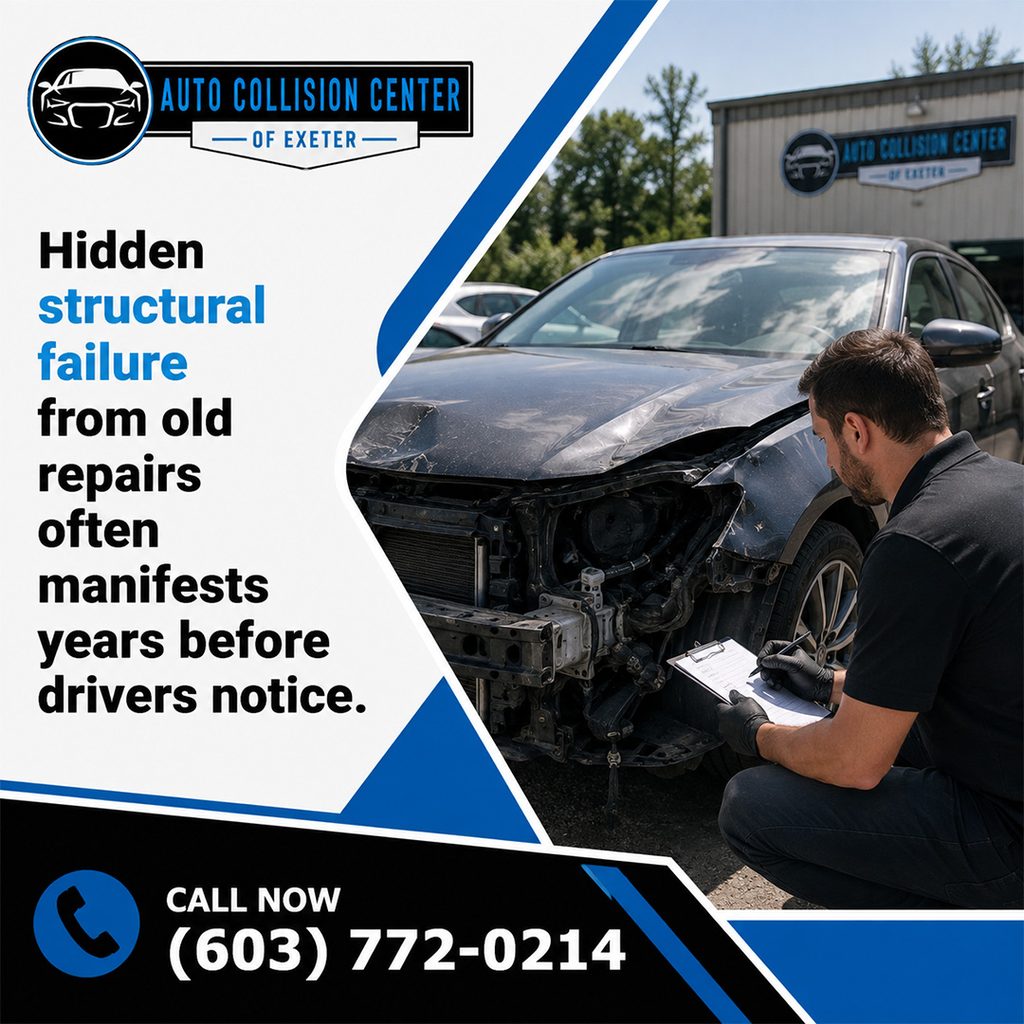
Your older collision repair can need a second look because factory tolerances and corrosion protection fail gradually over time. This matters most if you bought your car used or had it repaired elsewhere.
A repair that looked fine at pickup can still develop problems years later, often before you notice anything wrong. That matters most when you’re evaluating auto collision repair from years ago.
What Physical Signs Point to a Repair That Didn’t Hold Up?
Panel gap refers to the space between body panels like doors, hoods, and fenders. Factory panel gaps stay consistent and narrow. A gap that widens unevenly around one corner often means your panel wasn’t reinstalled to the original geometry.
Corrosion at a repair seam is another warning sign. A repair that skips corrosion protection can develop rust bubbles along a weld line within a few years. New England’s road salt makes this worse. You may not notice this rust until it has spread under the paint.
Paint mismatch can point to a rushed repair. If you notice a different color where one panel meets its neighbor, the color-matching step was likely skipped.
Factory-Repaired Vehicle vs. Compromised Repair
A factory-repaired vehicle means the collision repair matched the manufacturer’s OEM-spec tolerances for structure, parts, and finish. A compromised repair falls short of that standard.
| Sign | Factory-Repaired Vehicle | Compromised Repair |
| Panel gaps | Even, consistent spacing | Uneven or shifting gaps |
| Corrosion | None for years | Rust forms within years |
| Handling | Straight tracking, no pull | Vehicle pulls or drifts |
| Warning lights | None | Sensor lights appear |
What Should You Do If You Spot These Signs?
If you notice panel gaps, corrosion, or handling issues, have your vehicle inspected before the problem grows. A title history check helps too.
- Check the vehicle’s title history: Run the VIN through NMVTIS for a salvage or total-loss brand.
- Schedule a structural inspection: Ask a certified collision repair shop like Auto Collision Center of Exeter to measure panel alignment.
- Ask about ADAS recalibration: Confirm sensors or cameras were recalibrated through certified partners after the original repair.
Catching these signs early keeps affordable collision repair truly affordable for you. A small correction now costs far less than a structural repair after years of spreading damage.
At Auto Collision Center of Exeter, we inspect previously repaired vehicles for exactly these signs. Our technicians hold I-CAR Platinum certification, and we’re an I-CAR Gold Class shop. As a shop providing auto collision repair in Exeter, NH, we can tell you what’s a genuine problem.
Frequently Asked Questions
Can a poorly repaired vehicle be fixed years later?
In most cases, yes. At Auto Collision Center of Exeter, we can re-measure and straighten the structure to factory tolerance. We also correct panel fit and inspect for corrosion. Cost depends on how far the damage has spread.
Does a vehicle history report show collision repair quality?
No. Reports like NMVTIS reveal salvage or total-loss brands, not repair quality. We recommend a physical inspection, since affordable collision repair should never mean skipping it.
Should you get an inspection before buying a used vehicle with a repair history?
Yes. Our certified collision repair inspection can catch alignment, corrosion, and calibration issues that a title report won’t show.
Ready to Have an Older Repair Checked?
We offer inspections for previously repaired vehicles as part of our collision repair services in Exeter, NH. Contact Auto Collision Center of Exeter at (603) 772-0214 or accofexeter@gmail.com to schedule your inspection.