Synopsis
Auto body damage can shift structural reference points that affect wheel alignment and handling. Even minor collisions may cause pulling, vibration, or uneven tire wear. Proper structural measurement before alignment is key to restoring safe, predictable driving.
Key Takeaways
- Auto body damage can alter alignment even when suspension parts look fine.
- Minor or winter-related impacts can cause hidden structural shifts.
- Alignment alone cannot fix problems caused by body or frame movement.
- Measuring and correcting the structure first restores proper handling.

After an accident, many drivers focus on visible dents or paint damage. What often goes unnoticed is how auto body damage can change how your vehicle drives. Structural shifts caused by a collision can affect alignment, steering response, and stability long after repairs appear complete. Auto Collision Center of Exeter is a family-owned auto body repair shop that is dedicated to providing reliable and professional service. With decades of combined experience, we know that late-model vehicles can present with handling complaints weeks after an accident.
Vehicle alignment problems are not always caused by suspension parts alone. Damage to body panels, mounting points, or the unibody structure can change the reference points used to position wheels. For drivers in Exeter and nearby areas, winter weather conditions can contribute to more collisions, including angled impacts, which may increase the likelihood of alignment and structural concerns. Even seemingly minor cold-weather impacts can result in hidden alignment issues that merit inspection.
What Drivers Need to Know Before Ignoring Alignment Issues
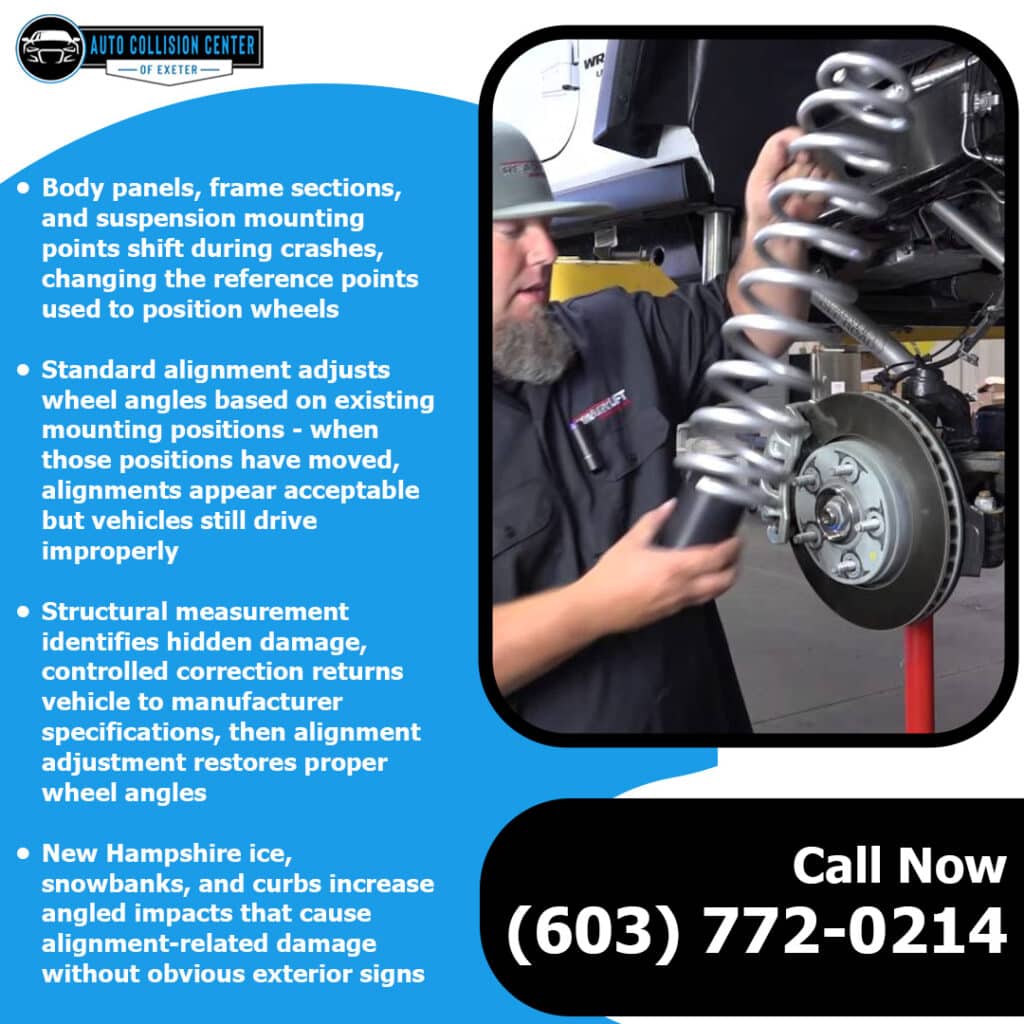
Collision damage moves the structural anchors that determine your wheel positions. Body panels, frame sections, and mounting brackets shift during impacts. Your vehicle no longer matches its original geometry. Problems surface days or weeks later as you notice pulling, vibration, or unusual tire wear patterns.
Exterior damage tells an incomplete story. That small dent might signal a displaced suspension tower lurking beneath the surface. Quick estimates miss these hidden complications. Modern cars demand precision. Factory tolerances are measured in millimeters, not inches. Advanced safety sensors require exact mounting positions to function correctly.
We begin auto body damage repair in Exeter, NH, with structural measurement. We identify deviations invisible to the naked eye. Then we correct the foundation before addressing alignment angles. This sequence prevents wasted repairs and protects your investment.
What Vehicle Alignment and Handling Actually Mean
Your vehicle’s response to steering depends on precise geometry working together to maintain control and proper tire contact with the road.
Defining Wheel Alignment in Modern Vehicles
Alignment specifies the exact angles between your wheels and the road surface. Three measurements matter most. Camber shows the vertical tilt when viewing wheels from the front. Caster indicates the steering axis angle from a side view. The toe reveals whether the wheels point inward or outward.
Your vehicle’s structure provides the baseline for these measurements. Alignment machines measure wheel angle geometry against manufacturer-specified reference points. If a vehicle’s structure is distorted by collision damage, these reference points may be misaligned – meaning alignment performed without first addressing structural damage may not return the vehicle to factory geometry. The equipment then sets angles relative to shifted reference points instead of factory locations. Our auto body repair shop measures structural integrity before performing any alignment work.
What Handling Problems Feel Like for Drivers
Post-collision handling issues create distinct sensations you’ll notice quickly. Your car drifts toward one side despite balanced tire pressure. The steering wheel sits crooked when you’re driving straight. Vibration pulses through the cabin during highway speeds on Route 101 toward Portsmouth.
Lane changes feel unstable between Exeter and the coast. You find yourself making constant small corrections. These symptoms reveal collision forces have altered your vehicle’s road behavior.
How Auto Body Damage Disrupts Alignment Geometry
Impact forces follow predictable paths through vehicle structures. Front collisions drive energy through bumper supports into frame members. Side impacts compress door structures and push forces into suspension areas. This energy bends, twists, and displaces structural components.
Standard alignment equipment adjusts suspension parts within their designed range, assuming structural mounting locations remain factory-correct. Auto body damage moves these locations beyond adjustment capability. Your alignment readout shows “in spec” because measurements use the shifted structure as a baseline. Straightening visible panels doesn’t fix underlying structural displacement. This is why our process for auto body repair in Exeter, NH, includes structural measurement before alignment work.
Structural Shift vs Suspension Damage
Suspension component failure shows clearly. Bent arms crack or deform. Damaged strut housings leak fluid. Replacing these parts restores function when the mounting structure remains correct.
Body structure displacement works differently. Frame rails or unibody sections have moved from their engineered positions. New suspension parts bolt to these shifted mounts. Alignment equipment measures angles from the displaced structure. Everything looks correct until you drive and notice the same pulling problems.
We address the sequence correctly at our certified auto body shop in Exeter, NH. Structural correction comes first using Spanesi measurement systems. We return frame sections to factory specifications. Then suspension repairs and alignment adjustments work from the correct baseline.
Why Minor Collisions Can Cause Major Alignment Changes
Low-speed impacts between 10 and 25 mph generate substantial structural movement. Parking lot accidents and backing collisions happen frequently. Impact energy shifts body structure without creating dramatic cosmetic damage.
Angle matters tremendously. Head-on impacts distribute forces evenly. Offset collisions concentrate energy on one side. One corner absorbs most of the impact force while the opposite side barely moves. This creates different alignment problems on each side.
New Hampshire winters can multiply these risks. Ice transforms gentle stops into uncontrolled slides. Drivers strike snowbanks, curbs, and guardrails at various angles. Snow cushions the visual impact while the structure absorbs the full collision forces. Suspension mounts displace without exterior evidence.
Common Types of Auto Body Damage That Affect Handling
The collision location determines which structural areas experience displacement. Understanding these patterns helps identify hidden damage compromising vehicle safety.
Fender, Quarter Panel, and Wheel Arch Damage
Front fender damage affects suspension tower regions where critical components mount. These panels sit near shock absorber tops and control arm brackets. Impacts that crumple fenders push mounting structures beyond factory specifications.
Rear quarter panels in wheel well areas provide structural support for trailing arms and shock mounts. The panel structure carries loads during normal driving. Deformation changes suspension mounting geometry. Wheel clearances decrease as displaced metal restricts suspension travel, and alignment angles shift accordingly.
Unibody and Frame Rail Damage
Frame rails extend your vehicle’s full length while carrying primary structural loads. Front collisions, side impacts, and rear-end crashes can bend these critical members. Millimeter-scale rail displacement creates significant alignment complications. Suspension components fasten through specific frame locations, so rail movement carries these attachment points with it. Standard alignment equipment cannot detect this because measurements reference the shifted structure.
Our certified auto body shop in Exeter, NH, uses Spanesi frame measurement systems to compare your vehicle against manufacturer specifications. This reveals structural displacement affecting suspension mounts. Without proper measurement, attempted alignment corrections provide false reassurance.
Bumper and Impact Absorber Damage
Contemporary bumper assemblies include crush structures behind visible covers. Front impacts compress or damage these elements along with the mounting hardware. Reinforcement bars connect to frame rails through precisely located attachment points.
This damage affects alignment because these locations serve as equipment reference points. Alignment systems rely on bumper structure positions when calculating wheel angles. Bent or shifted mounting hardware produces inaccurate readings.
Subframe and Mounting Point Distortion
Engine cradles and rear subframe assemblies bolt to the body structure at specific locations. These subframes carry related suspension attachment points. Side impacts or severe road hazards shift the subframe position or warp the body mounting areas.
Subframe displacement moves every attached component simultaneously. Steering racks, control arms, and stabilizer bar mounts relocate together. Setting correct alignment becomes impossible without repositioning the subframe through proper auto body damage repair procedures.
Signs Auto Body Damage Is Affecting Your Alignment
Recognizing these symptoms helps you address problems before they cause additional damage or compromise safety. Warning signs often appear even after seemingly minor collisions.
Watch for these indicators:
- The steering wheel remains crooked when driving straight
- Vehicle consistently drifts toward one side on level pavement
- Tires develop uneven or rapid wear after an accident
- Steering feels vague or needs constant small corrections
- More effort is required to turn compared to before the collision
- Tires squeal during ordinary low-speed turns
- Vibration intensity changes with vehicle speed
These symptoms reveal that body damage has compromised your vehicle’s geometry. Modern vehicles with tight manufacturing tolerances show problems faster than older models. Professional auto body damage repair in Exeter, NH, by our team addresses structural issues before alignment work.
Why Alignment Adjustments Alone Do Not Fix Collision Damage
Quick alignment services often fail after collisions because the equipment has inherent limitations when the body structure has moved from factory positions.
Alignment machines adjust suspension components through their designed movement ranges. Technicians change angles using camber bolts, eccentric washers, and tie rod adjustments. These methods assume all mounting locations remain in factory-specified positions.
Auto body damage displaces these mounting points beyond adjustment capability. Your alignment report may show “within specification” readings, but those specifications now apply to a structure sitting in the wrong location. Wheel angles measure correctly relative to displaced frame members.
As a certified auto body shop in Exeter, NH, Auto Collision Center of Exeter takes a different approach. Structural correction happens before alignment work using Spanesi measurement systems. We identify deviations from manufacturer specifications and correct them through controlled straightening. Then alignment adjustments work from the proper foundation, delivering results that last because the underlying geometry is correct.
How Professional Auto Body Repair Restores Proper Handling
Documented repair processes address both visible and hidden collision damage. This systematic method protects your investment and safety.
Measuring the Vehicle to Manufacturer Specifications
Electronic measurement systems compare your vehicle’s actual dimensions against factory engineering data. Laser and computerized sensors check hundreds of structural points. They locate areas where collision forces caused displacement even without visible damage indicators.
Modern vehicles are built with tight structural tolerances, often measured in millimeters. Even small deviations can affect handling, suspension performance, and vehicle safety, which is why precision measurement and repair to manufacturer specifications are important. This precision level supports both proper alignment and accurate sensor mounting. Visual assessment alone misses subtle displacements that significantly affect handling and safety system operation.
We use Spanesi measurement equipment that provides continuous feedback during repair processes at our auto body repair shop. This enables precise corrections rather than approximate adjustments. The system confirms when the structure returns to manufacturer specifications before we proceed with other repairs.
Correcting Structural and Panel Alignment
Measurement data guides controlled straightening operations. Hydraulic equipment applies calibrated force to specific structural areas. The measurement system monitors progress continuously during correction procedures.
Body panel alignment follows structural repairs. Panels attach to the structure at engineered locations. Correcting the underlying structure allows panels to return to proper positions. Door gaps, fender lines, and mounting points all achieve factory dimensions.
Modern vehicles use high-strength steel in strategic locations for crash protection. Auto Collision of Exeter provides proper car body repair that maintains these engineered safety zones during correction. Incorrect heating or straightening techniques can weaken materials and reduce collision protection even when repairs look acceptable.
Final Alignment After Structural Repairs
Alignment work should only proceed after structural integrity returns to specifications. Sequence matters significantly. Attempting alignment before structural correction wastes time and money. Angles change when technicians later straighten the structure.
Post-repair alignment uses the corrected structure as the reference baseline. Suspension adjustments now have accurate mounting points. Your vehicle achieves alignment angles that deliver designed handling characteristics and normal tire wear.
We verify results through road testing on various surfaces around Exeter. Real-world driving reveals problems that stationary measurements miss. Our team brings over 50 years of combined experience to identifying and resolving these complications.
Why Certified Repairs Matter for Late-Model Vehicles
Contemporary vehicles integrate structural components with electronic safety systems differently from older designs. This integration increases the importance of proper collision repairs for safety and functionality.
Many ADAS sensors and cameras are mounted in locations where structural damage can alter their effective position. After structural and alignment repairs, ADAS recalibration is often required to ensure proper function. Collision damage that displaces sensor mounting locations affects their function. When systems need recalibration, we coordinate with certified partners who have specialized equipment for these adjustments.
Newer vehicles incorporate aluminum and ultra-high-strength steel in specific locations. These materials demand specialized repair techniques. Improper heat application or straightening methods weaken materials and reduce engineered crash protection.
As an I-CAR Gold Class certified facility, we maintain current training on evolving repair requirements. Bryan Dinger brings more than twenty years of auto collision repair experience, along with training from Universal Technical Institute. This expertise supports complex repairs at our certified auto body shop in Exeter, NH.
When to Have Alignment and Body Damage Evaluated
Proper timing for collision repair and alignment evaluation varies by situation. Each scenario requires specific consideration.
Schedule evaluation immediately following any collision, regardless of apparent damage severity. Contemporary vehicles develop alignment problems from impacts that appear insignificant. Parking lot collisions at walking speed can shift body structure enough to alter wheel angles.
Seek professional auto body damage repair when handling characteristics change days or weeks after accidents. Initial concerns sometimes mask underlying alignment problems. As you adapt and components settle, symptoms become more noticeable. These delayed indicators signal damage requiring proper structural correction.
Request evaluation before replacing tires or suspension components. Service providers sometimes recommend replacements based on wear patterns. However, if underlying body damage caused the problem, new parts will wear prematurely again. Our certified auto body shop addresses collision damage first for lasting results.
Restoring Handling Starts With Proper Auto Body Repair
Collision damage affects alignment and handling through structural displacements that visual inspection often overlooks. These changes compromise safety, accelerate tire wear, and reduce vehicle control. Proper assessment requires measurement equipment to compare actual dimensions against manufacturer specifications.
Alignment adjustments alone cannot correct collision damage effects. Underlying structure must return to manufacturer tolerances before alignment produces lasting improvements. This approach protects investments in new tires and suspension while restoring the designed handling characteristics.
Contemporary vehicles demand precise repair techniques because of integrated safety systems and advanced materials. We provide auto body damage repair in Exeter, NH, that combines structural measurement, controlled correction procedures, and post-repair verification. This delivers results meeting manufacturer standards.
If your vehicle shows alignment or handling problems after a collision, look for a reliable auto body shop near you. Contact Auto Collision Center of Exeter at (603) 772-0214 or accofexeter@gmail.com to schedule an assessment. Our team will measure your vehicle’s structure, identify specification deviations, and explain necessary repairs to restore proper handling and alignment. We coordinate with all insurance companies and provide detailed documentation throughout the repair process.