Synopsis
Auto body repairs involve far more than restoring visible panels. Beneath the surface, structural components, safety systems, and precise measurements determine how well a vehicle protects you after an accident. Auto Collision Center of Exeter explains why professional evaluation and methodical repair practices matter. Our repairs focus on correcting both visible and hidden damage so vehicles return to safe, predictable performance.
Key Takeaways
- Hidden structural damage often exists after minor-looking impacts
- Diagnostic scans reveal safety system faults without warning lights
- Proper disassembly exposes damage missed by surface inspections
- Structural alignment directly affects crash protection and handling
- Certified training supports accurate, repeatable repair outcomes
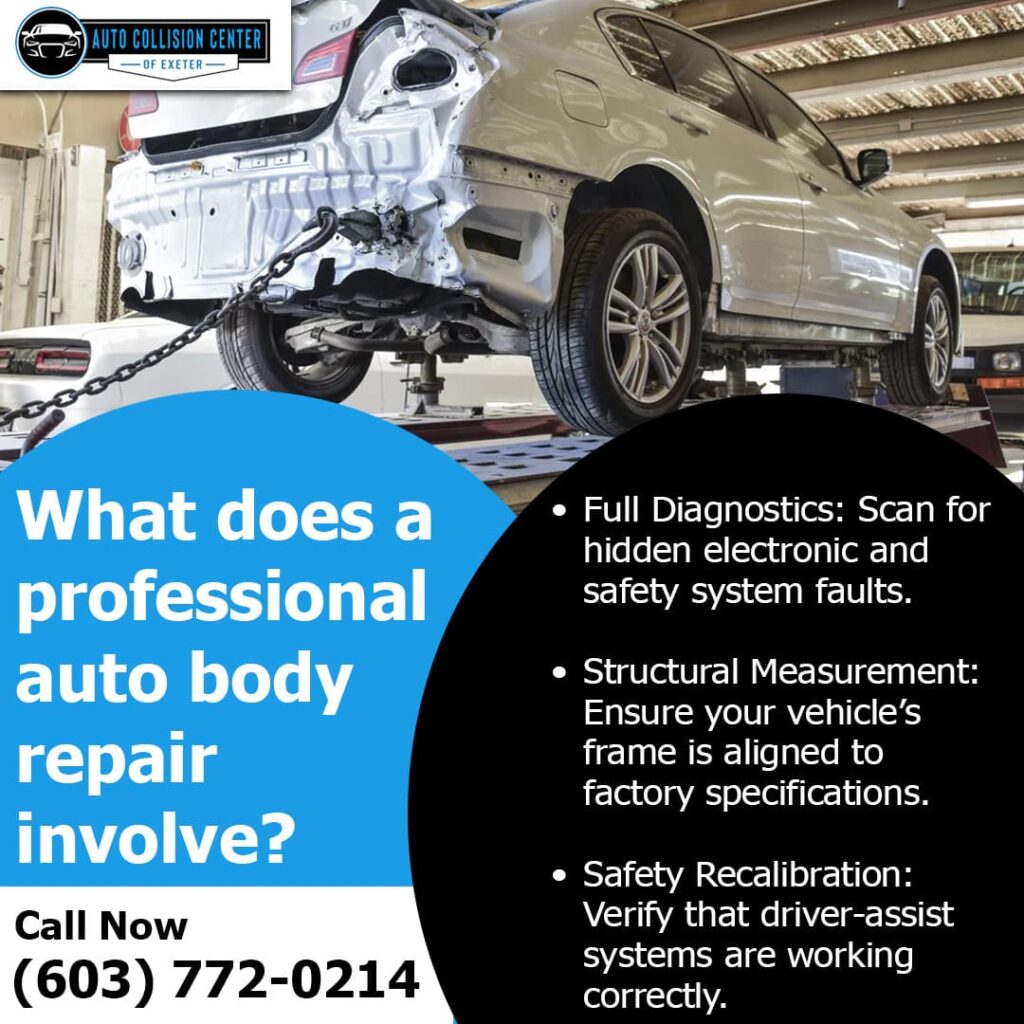
Collision damage extends far beyond what you observe on your vehicle’s exterior. Scratches and dents represent only surface-level issues. Modern vehicle construction includes intricate structural systems designed to absorb impact energy and protect passengers.
Recognizing what occurs during professional restoration helps you make better choices about your vehicle’s repair. Concealed structural problems compromise safety, alter driving performance, and reduce your vehicle’s long-term value. At Auto Collision Center of Exeter, we pride ourselves on fixing what other auto body repair shops miss. Our team follows methodical repair protocols that examine and correct both obvious and hidden collision damage.
Why Auto Body Damage Is Often More Than What You Can See
External appearance rarely shows the full scope of accident damage. Today’s vehicles incorporate engineered crush zones and reinforced frameworks. These elements disperse collision forces throughout the vehicle structure.
What appears as minor front-end contact may actually compromise frame geometry and component mounting systems. Critical safety equipment can suffer damage without visible external indicators. Damage to certain parts reduces your vehicle’s protective capabilities during subsequent impacts.
Collision energy transfers through hidden reinforcement components, structural crossmembers, and attachment locations. These parts sit behind exterior panels where standard visual checks cannot detect problems. Assuming minimal damage from superficial appearance creates dangerous situations.
Suspension geometry changes, sensor system failures, and structural weakness frequently occur alongside apparently minor collisions. Evaluation by qualified technicians at a certified auto body shop identifies these concerns early. We locate issues before they develop into major safety problems.
Initial Vehicle Assessment: What a Professional Auto Body Shop Looks For
Complete collision assessment requires a systematic vehicle examination. Our certified technicians examine beyond exterior surfaces. We detect structural damage and safety system malfunctions affecting your vehicle’s operation.
When you arrive, we begin with thorough documentation. We photograph your vehicle from over 100 angles, capturing interior and exterior conditions. This detailed record protects your interests and creates accurate insurance documentation.
Visual Inspection vs Structural Assessment
Surface-level inspection reveals obvious panel damage. Scratched paint and dented sheet metal show immediately. Structural evaluation involves a detailed examination of attachment points, frame components, and suspension connection areas.
We take precise measurements of door clearances, hood positioning, and body panel alignment using Spanesi measuring systems. These measurements reveal frame distortion invisible during casual observation. Inconsistent spacing between body components frequently indicates underlying frame compromise. When searching for an auto body shop near you, locate facilities with equipment for both inspection types.
Diagnostic Scans and Early Safety Checks
Electronic diagnostic procedures reveal fault codes within vehicle systems. These codes identify problems with airbag modules, anti-lock brake controllers, and driver assistance sensors.
Impact forces trigger diagnostic codes. Your dashboard may display no warning indicators even when critical systems have recorded faults. Pre-repair scanning prevents safety system malfunctions.
Our facility uses Snap-On and Bosch diagnostic equipment to access stored trouble codes. These codes direct our repair planning for auto body damage repair in Exeter, NH. They reveal which systems require attention beyond visible body damage.
Disassembly: Where Hidden Damage Is Often Found
Panel removal exposes the actual extent of collision forces. Exterior bumper covers, fender assemblies, and trim components conceal structural elements. Energy-absorbing impact bars, mounting hardware, and inner reinforcement panels sustain damage invisible from outside.
Typical concealed damage locations include:
- Energy absorption structures behind bumper covers
- Component attachment hardware securing panels
- Inner fender reinforcements and wheel well structures
- Electrical wiring systems and sensor mounting brackets
- Bonded joints and factory weld locations
Supplemental damage may be uncovered during systematic disassembly. Facilities omitting thorough panel removal miss structural damage. Incomplete assessments compromise occupant protection.
We photograph every disassembly phase for documentation. This visual record helps insurance adjusters recognize supplemental damage. We measure the vehicle, if necessary, to detect frame distortion. Complete disassembly procedures at a certified auto body shop like ours protect your financial investment and passenger safety.
Structural Repairs That Protect Your Vehicle’s Safety
Restoring correct structural geometry demands precision work. It requires thorough knowledge of manufacturer specifications. Frame and unibody damage influences vehicle handling characteristics, tire wear patterns, and occupant protection during future collisions.
Unibody and Frame Alignment Explained
Contemporary vehicles predominantly use a unibody design. This construction method integrates the frame structure with the body shell. Collision forces displace this integrated structure by small increments measured in millimeters. Minor geometric changes create abnormal tire wear, steering drift, and reduced crash protection effectiveness.
Our facility uses Spanesi computerized measuring equipment to compare your vehicle’s actual dimensions against manufacturer specifications. This technology identifies geometric distortions beyond human visual detection. Repair corrections must achieve tolerances within millimeter accuracy. Results outside these tolerances compromise both vehicle operation and occupant safety for auto body damage repair.
Why Precision Matters for Crash Performance
Vehicle crash test ratings depend on maintaining specific structural designs. When collision damage modifies these engineered designs, crash performance characteristics change. Incorrect structural repairs redirect impact forces into areas lacking proper energy absorption capability.
Professional collision repair adheres to documented manufacturer procedures. These technical procedures define correct welding positions and methods, structural adhesive application requirements, heat-affected areas requiring component replacement, and quality verification measurement locations.
We utilize Prospot welding systems following both OEM and I-CAR documented repair procedures. Our certified auto body shop prioritizes passenger safety above speed or cost considerations.
Parts Selection and Fitment Beneath the Panels
Component selection significantly influences repair durability and vehicle operation. Differences between manufacturer-specified parts and inferior substitutes become apparent within months after repair completion.
Original equipment manufacturer parts preserve factory specifications for dimensional accuracy, surface finish, and system integration. They work correctly with safety sensors and mounting structures as originally designed. Budget-quality substitute parts may look similar externally but frequently lack proper sensor provisions, reinforcement characteristics, or corrosion prevention treatments.
Incorrect component fitment generates multiple problems:
- Irregular panel spacing affecting aerodynamic performance
- Mispositioned sensor hardware reducing detection precision
- Inadequate attachment points causing premature failures
- Moisture penetration from improper sealing
We follow insurance policy requirements while discussing component options with you directly. We prioritize OEM and high-quality aftermarket parts from reputable manufacturers. When customers opt for non-OEM parts, we source components from trusted suppliers, never low-quality parts from Amazon, eBay, or RockAuto. We offer car body repair in Exeter, NH, with no compromise of passenger safety, for insurance processing convenience.
Component Quality Impact on Auto Body Repairs
| Characteristic | OEM Components | Quality Alternatives | Budget Substitutes |
| Factory dimensional accuracy | Exact match | Close tolerance | Frequently inaccurate |
| Sensor mounting precision | Factory specification | Near specification | Often absent |
| Corrosion resistance | Complete treatment | Manufacturer dependent | Minimal protection |
| Warranty protection | OEM supported | Limited coverage | Minimal coverage |
| Service longevity | 5+ years expected | 3-5 years expected | 1-2 years expected |
Paint Preparation Is More Than Color Matching
Professional refinishing protects exposed metal surfaces and preserves appearance over time. Surface preparation procedures determine paint adhesion quality and environmental damage resistance.
Surface Prep and Corrosion Protection
Bare metal surfaces oxidize rapidly without protective treatment. We chemically clean, acid etch, and apply conversion coating to exposed metal before primer application. These procedures create molecular bonding that prevents oxidation beneath paint layers.
Inadequate surface preparation causes paint system failure within 12-24 months. Blistering, delamination, and corrosion develop at repair boundaries when preparation steps are insufficient. Proper auto body repair incorporates these protective procedures despite remaining invisible after job completion.
Blending and Finish Integrity
Color matching extends beyond selecting factory paint codes. Original factory finishes fade gradually with environmental exposure. We employ RM computerized camera systems to analyze your vehicle’s current color precisely. New paint application extends into surrounding panels, eliminating visible repair boundaries.
Our heated downdraft paint booth provides a contamination-free refinishing environment. When necessary, we perform polishing for a flawless finish. Color blending preserves resale value and creates a seamless visual appearance. Multiple clear coat applications deliver ultraviolet protection and scratch resistance. These protective coatings maintain your vehicle’s exterior finish against harsh New England climate conditions.
Reassembly and Post-Repair Safety Verification
Correct component reinstallation requires adherence to torque specifications, fastener placement sequences, and clip positioning requirements. Missing or incorrectly installed fasteners permit components to shift during vehicle operation.
Follow-up diagnostic scanning confirms safety system operation after repairs. We verify that no new fault codes exist and confirm that repairs resolved pre-existing codes. This verification procedure identifies problems before vehicle delivery.
Advanced Driver Assistance Systems need recalibration following many collision repairs. These protective systems function correctly only when sensors maintain manufacturer alignment specifications.
We coordinate ADAS recalibration through certified service providers using Hunter and Bosch calibration systems. This process protects safety features, helping prevent future accidents. We manage everything so that your vehicle’s protective systems operate as designed.
Road testing reveals handling characteristics, abnormal sounds, and alignment concerns. Our quality control includes test driving to confirm your vehicle performs to manufacturer standards. Complete interior and exterior cleaning prepares your vehicle for service return.
Why Certification and Experience Matter in Auto Body Repairs
Vehicle technology advances continuously. Repair methods effective five years ago may prove inadequate for current vehicle designs. Continuous technical training through I-CAR programs keeps technicians current with evolving manufacturer procedures.
I-CAR Gold Class recognition demonstrates an ongoing commitment to technical training and facility capability. Only shops satisfying rigorous criteria receive this industry recognition. Bryan Dinger contributes over twenty years of collision repair experience, combined with Universal Technical Institute technical education. This professional background guides our repair approach and quality expectations.
Current vehicle designs incorporate advanced materials, including high-strength steel alloys, aluminum structures, and composite plastic components. Each material demands specific repair techniques and joining methods. Incorrect procedures weaken these engineered materials and compromise occupant protection. As a certified auto body shop in Exeter, NH, we maintain currency with these continuously evolving technical requirements.
Our I-CAR Platinum-certified technicians apply documented procedures throughout every repair phase. This systematic consistency protects your vehicle regardless of damage complexity or severity.
How Choosing the Right Auto Body Repair Shop Protects Your Investment
Repair quality directly influences vehicle service life and market value. Potential buyers recognize substandard repair work through finish texture variations, panel alignment inconsistencies, and abnormal component wear. These quality indicators reduce trade-in valuations and buyer confidence levels.
Incomplete repairs generate cascading problems throughout your vehicle’s life. Unprotected metal surfaces corrode progressively. Misaligned components experience accelerated wear. Safety systems develop unpredictable malfunctions. Correcting these developing problems costs substantially more than proper initial repairs.
Transparent communication during the repair process reduces customer stress and eliminates uncertainty. We document vehicle condition with over 100 photographs during initial vehicle intake. We explain repair procedures thoroughly and provide realistic timeline projections. This communication transparency helps you understand activities occurring throughout your vehicle’s restoration.
Exeter residents and nearby Seacoast community members choose facilities prioritizing safety above production speed. Affordable auto body repair represents fair pricing for correct repair procedures rather than cost-cutting shortcuts compromising quality outcomes.
What Beneath-the-Surface Repairs Mean for Your Safety
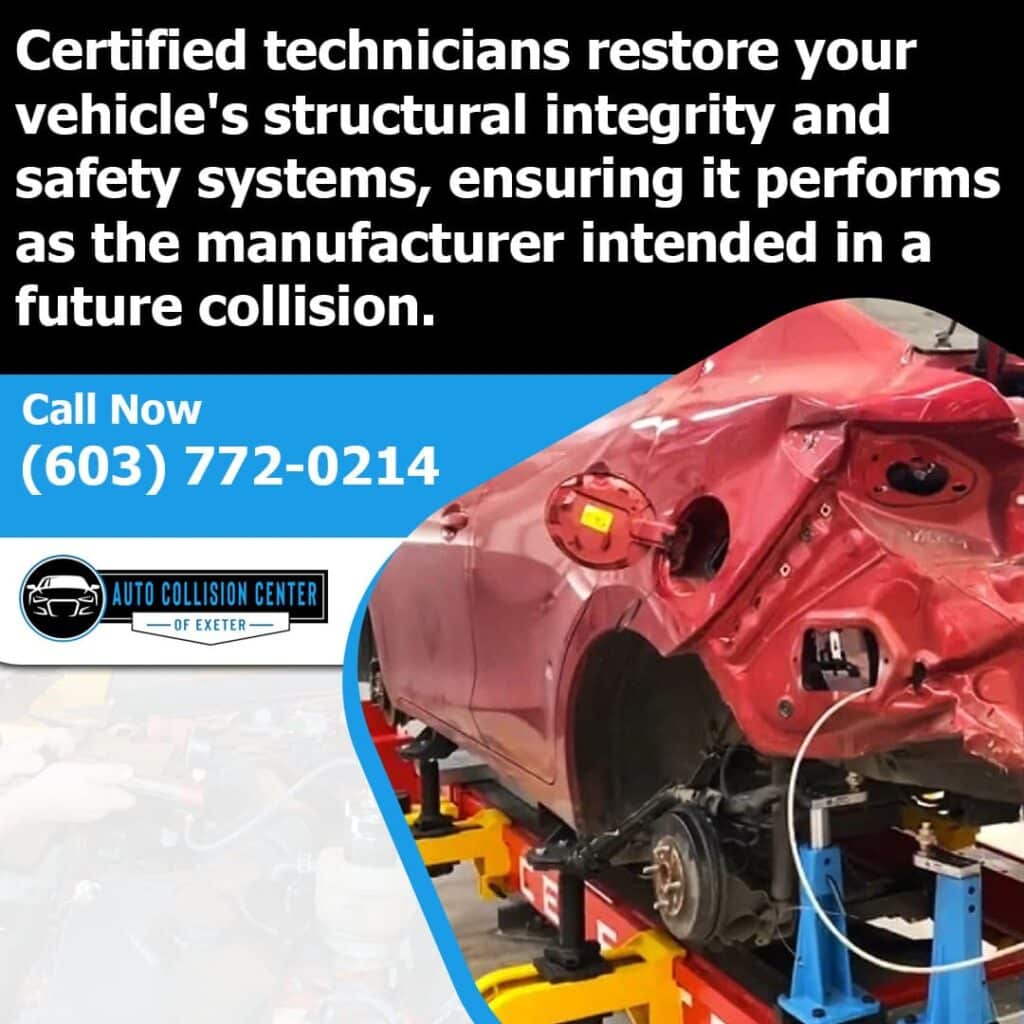
Professional collision repair addresses damage beyond visual observation. Structural geometry, safety system functionality, and long-term durability depend entirely on proper repair execution. Selecting a certified auto body shop protects your family members and preserves your vehicle’s financial value.
Auto Collision Center of Exeter combines extensive experience with systematic repair processes addressing both visible and concealed damage. Your vehicle merits repairs restoring original safety specifications and performance capabilities.
Contact our facility at (603) 772-0214 or email accofexeter@gmail.com to discuss your repair requirements. Visit our auto body shop near you in Exeter for a detailed damage assessment. We provide detailed estimates and maintain transparent communication throughout your vehicle’s restoration process. Discover why families across Exeter and the Seacoast region trust our collision repair expertise.