Synopsis
Your vehicle can suffer serious structural or electronic damage even after a minor collision, and many issues remain hidden until they affect safety, handling, or ADAS systems. Auto Collision Center of Exeter explains how to identify early warning signs, why quick inspection matters, and how certified repair protects long-term performance. We outline what drivers should look for and when professional collision repair becomes essential.
Key Takeaways
- Hidden damage can affect structure and safety.
- ADAS sensors often require calibration after impacts.
- Steering changes signal frame or suspension problems.
- Warning lights indicate deeper electronic faults.
- Paintless dent repair works only when paint remains intact.
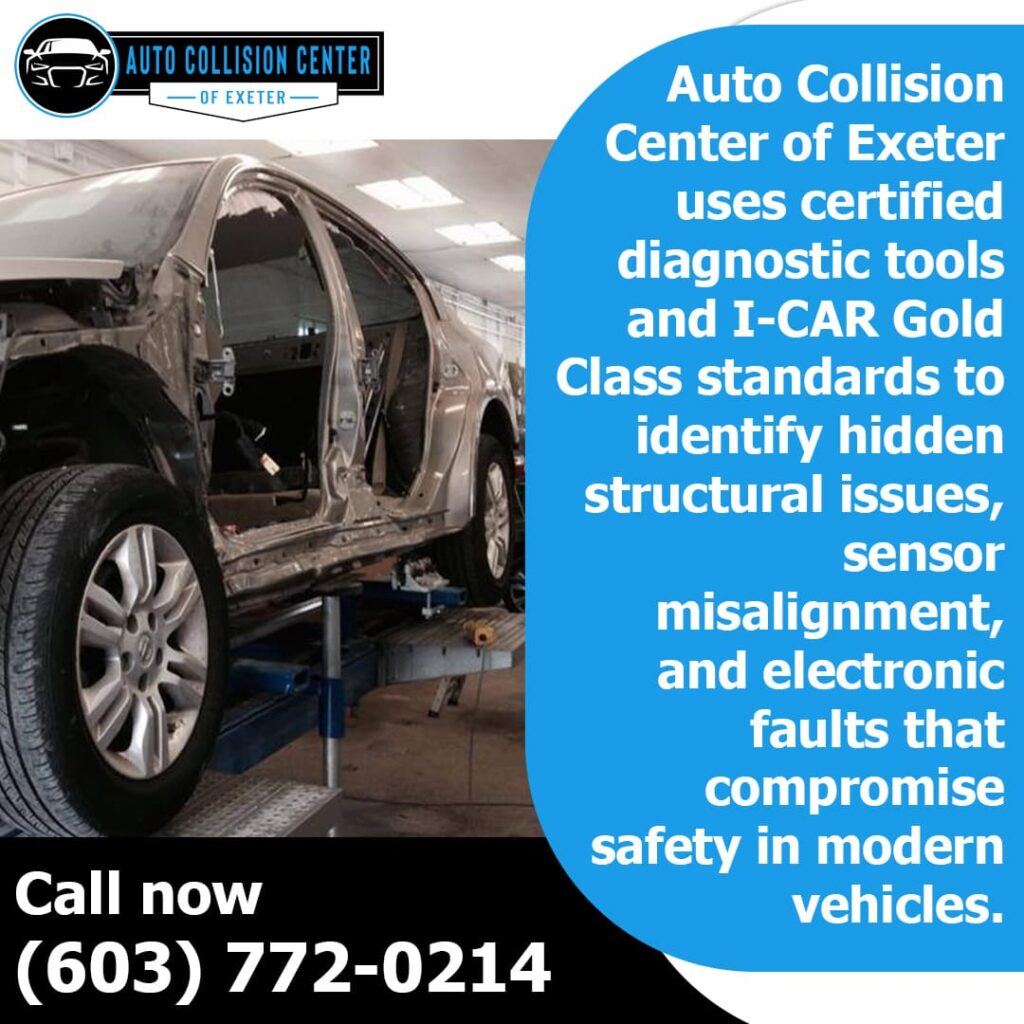
Even a small accident can leave your vehicle with damage that is not immediately visible. Many drivers focus on the surface issues after a minor collision, such as a scuffed bumper or a small dent, and assume the rest of the vehicle is unaffected. Yet impacts can shift structural components, disrupt modern safety systems, and weaken areas that are designed to protect you. Problems like these often go unnoticed until they grow into something more serious.
As vehicles become more advanced, hidden damage has become more common. Today’s models depend on sensors, reinforced materials, and tightly engineered crumple zones that can be affected by low-speed impacts. That is why understanding the early signs of deeper collision damage is so important for anyone who owns a late-model vehicle.
Auto Collision Center of Exeter has over 50 years of combined experience in providing collision repair in Exeter, NH. We know that many cars that look fine on the outside may show structural, mechanical, or electronic issues once inspected. We help drivers identify the warning signs that their car needs professional attention. We explain what to look for, how to spot hidden concerns, and when paintless dent repair might be a suitable option.
Understanding Collision Damage Beyond the Surface
Collision damage extends far beyond visible dents and scratches. While cosmetic issues are obvious, the real concern lies beneath your vehicle’s exterior panels.
Structural damage affects your car’s frame or unibody construction. These components form the skeleton that holds everything together. When they bend, twist, or shift out of alignment, your vehicle’s ability to protect you during another accident diminishes significantly. Crumple zones may not function properly if the underlying structure is compromised.
Modern vehicles also feature Advanced Driver Assistance Systems (ADAS) that rely on cameras, radar sensors, and precise calibration. Even minor impacts can knock these sensors out of alignment. Your automatic emergency braking, lane departure warning, and blind spot detection systems may appear to work normally, but could fail when you need them most.
Caliber Insights reports that demand for post-repair ADAS calibrations rose to about 65 percent of collision repairs in the second quarter of 2025. An Insurance Institute for Highway Safety research has found that automatic emergency braking and related forward collision warning systems reduce front-to-rear crash involvement in the range of roughly 43 to 50 percent, depending on the system and methodology used. However, these systems only work when properly calibrated after any collision affecting their sensors or mounting points.
We follow OEM and I-CAR repair procedures while using Snap-On and Bosch diagnostic equipment to identify both visible and hidden damage. Our thorough pre-scan process documents your vehicle with approximately 100 photographs and runs complete diagnostic tests to detect fault codes indicating deeper problems. This systematic approach catches issues that visual inspection alone would miss.
What Are the Warning Signs That My Car Needs Collision Repair?
After any accident, certain warning signs tell you that a professional inspection is necessary. Recognizing these indicators early prevents safety risks and saves money on more extensive repairs later.
a. Visible Body Damage and Paint Issues
Crumpled panels, uneven gaps between body parts, and paint damage signal more than cosmetic problems. When doors, hoods, or trunk lids don’t close flush with the body, frame misalignment is often the cause. These gaps allow water intrusion, which leads to rust and electrical problems.
Paint damage exposes bare metal to moisture. What looks like a small chip today can spread into a larger rust problem within months, especially in New Hampshire’s harsh winter climate with road salt.
When Paintless Dent Repair Works:
For minor dents where paint remains intact, paintless dent repair offers a faster, more affordable solution. We coordinate PDR services through trusted partners who can remove small dings without repainting. This option preserves your factory finish and typically takes less time than traditional bodywork.
PDR works best for:
- Small dents under 3 inches in diameter
- Hail damage with no paint cracking
- Door dings and parking lot dents
- Minor collision dents with intact paint
However, PDR is not suitable when paint has cracked, dents have sharp creases, metal is stretched, or structural damage is present.
b. Steering or Handling Feels “Off”
If your vehicle pulls to one side, vibrates at certain speeds, or requires constant steering corrections, you should get a professional inspection. These symptoms can indicate suspension or alignment problems, tire issues, wheel imbalance, or, in some cases, structural or frame damage. Professional measuring and alignment testing will identify the root cause.
Common handling problems include:
- Vehicle pulling left or right while driving straight
- Steering wheel vibration at highway speeds
- Uneven or rapid tire wear
- Off-center steering wheel when driving straight
- Difficulty maintaining lane position
Frame misalignment affects how your tires contact the road. Uneven tire wear follows quickly, shortening tire life and reducing traction. Poor alignment also increases fuel consumption.
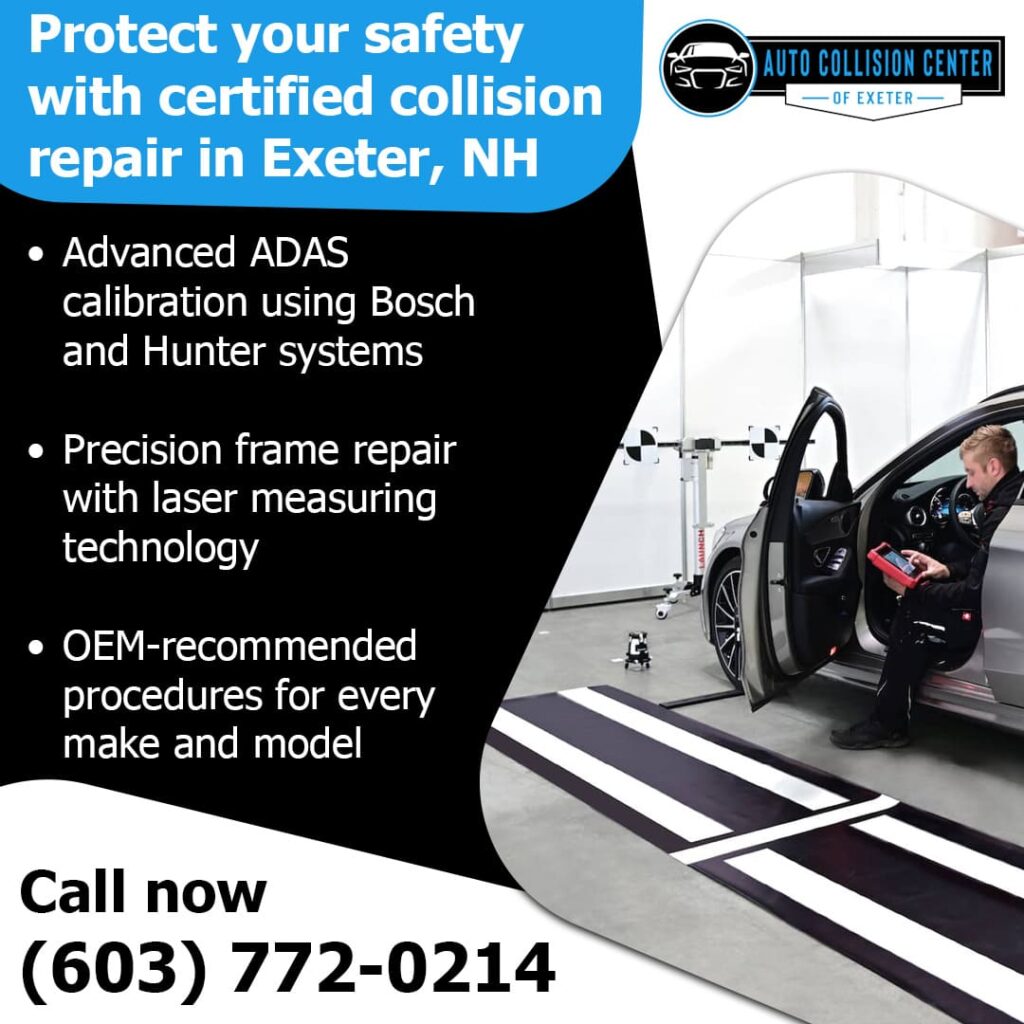
We use Spanesi frame measuring equipment and Hunter alignment systems to verify that your vehicle’s structure matches manufacturer specifications. Laser measurement technology detects deviations measured in millimeters that human eyes cannot see.
c. Warning Lights or Electrical Issues
Dashboard warning lights that remain illuminated after an accident indicate system malfunctions.
Critical warning indicators include:
- Airbag warning lights
- ABS (Anti-lock Brake System) lights
- Check engine lights
- Traction control warnings
- ADAS system alerts
Airbag sensors rely on precise frame geometry to detect collision forces accurately. When frames bend or twist, these sensors may fail to deploy airbags properly during subsequent accidents. We use Snap-On and Bosch diagnostic tools to read fault codes from your vehicle’s computer systems. Simply clearing codes without addressing underlying issues leaves your safety systems compromised.
Electrical problems like flickering lights, malfunctioning power accessories, burning odors, rapid battery drain, or system failures all indicate wiring damage that requires professional repair.
d. Unusual Noises or Poor Ride Quality
New sounds appearing after an accident signal different types of mechanical damage:
- Clunking: Loose suspension parts or broken components
- Grinding: Bearing failures or brake issues
- Squeaking: Spring damage or worn bushings
- Rattling: Loose panels or damaged mounts
Ride quality changes like excessive bouncing, instability at highway speeds, harsh impacts from normal roads, or swaying during turns indicate suspension damage. Your vehicle’s suspension maintains tire contact with the road and absorbs shock. When these components are damaged, handling becomes unpredictable and safety decreases.
Why Is ADAS Calibration Important After a Collision?
Advanced Driver Assistance Systems represent significant safety advances in automotive history. These systems include automatic emergency braking, lane departure warning, and blind spot monitoring. However, they only protect you when sensors remain properly aligned and calibrated. Even minor collisions can shift cameras and radar sensors out of position by fractions of a degree.
Calibration Requirements:
Industry research and whitepapers warn that skipping required ADAS calibrations or performing them incorrectly can degrade system performance and introduce asymmetric or inaccurate responses. Following OEM calibration procedures helps restore system accuracy and reliability post-repair.
NHTSA finalized a rule requiring automatic emergency braking systems to be standard on new passenger cars and light trucks beginning in model year 2029. ADAS technologies have the potential to prevent approximately 62% of traffic deaths and about 60% of crash injuries annually when properly implemented, according to the National Safety Council.
Our Calibration Process:
We coordinate ADAS recalibration through certified partners who use Hunter and Bosch equipment. Both static and dynamic calibration methods follow manufacturer specifications to restore full functionality. Our pre-scan and post-scan diagnostic testing verifies that all systems work properly. Skipping this step leaves your safety systems unreliable and dashboard warning lights illuminated.
The Risks of Delaying Collision Repair
Putting off collision repairs can lead to escalating safety and mechanical issues over time. Damaged crumple zones lose their ability to absorb crash energy effectively in subsequent collisions, increasing injury risk. According to the Insurance Institute for Highway Safety (IIHS), around 25% of motor vehicle fatalities occur in side-impact crashes, where the integrity of the vehicle’s structure is critical to occupant protection.
| Damage Type | Immediate Impact | If Left Unrepaired |
| Frame/Unibody Misalignment | Steering pulls, uneven tire wear | Compromised crash protection and structural integrity |
| Uncalibrated ADAS Sensors | Incorrect sensor responses | Malfunction or failure of driver assistance systems |
| Airbag/ABS Sensor Faults | Warning lights activate | Risk of airbag non-deployment and increased injury severity |
| Paint Damage Exposing Metal | Small chips or scratches | Rust spreading and structural weakening within 6–12 months |
Rust formation accelerates when paint is damaged, allowing corrosion to spread under the surface and weaken key structural components. Misaligned vehicle parts cause uneven tire wear, which can be 40 to 60% faster than usual, and lead to decreased fuel efficiency by 5 to 10%, along with irregular brake wear. Vehicles with documented frame damage often lose 15 to 30% of their market value, as many buyers avoid cars with structural concerns.
Our shop offers a limited lifetime warranty on qualifying repairs for as long as you own the vehicle. Warranty coverage is subject to specific terms and exclusions, and applies only to work completed and documented by our facility. For full details and any exclusions, please see our warranty terms or ask us for a written copy.
What Sets Certified Collision Repair Shops Apart
Choosing the right repair facility makes all the difference in safety and quality. Professional shops with proper certifications and equipment deliver results that restore your vehicle to pre-accident condition.
a. I-CAR Gold Class Certification
I-CAR Gold Class certification represents the highest training standard in auto collision repair. Only about 20% of shops nationwide meet these requirements. Modern vehicles use high-strength steel, aluminum, carbon fiber, and advanced adhesives. Trained technicians understand these differences and follow correct procedures for your specific vehicle.
Our team maintains I-CAR Platinum certification through continuous education. Bryan Dinger, our general manager, brings more than twenty years of industry experience plus formal training from Universal Technical Institute. The team’s combined 50 years of experience means we’ve handled virtually every type of collision damage repair in Exeter, NH, on all vehicle makes and models.
b. OEM Standards and Advanced Equipment
Original Equipment Manufacturer standards specify exactly how repairs should be performed. Following these standards maintains structural integrity, warranty coverage, and safety system functionality.
Our Equipment and Capabilities:
- Spanesi frame equipment for laser-guided measuring and straightening
- RM paint systems for computerized color matching
- Hunter alignment systems for precise wheel alignment
- Bosch diagnostic tools for system verification
- Heated downdraft paint booth for flawless finishes
- 5,000 square foot facility with dedicated repair bays
We coordinate ADAS calibration through certified partners using Hunter and Bosch systems. We follow OEM repair procedures for every vehicle, which tells us which welding methods to use and how to restore crash protection systems.
c. Lifetime Warranty and Community Trust
Our limited lifetime warranty covers all repairs and paintwork for as long as you own your vehicle. As a family-owned business serving Exeter since January 2023, we’re invested in our community’s well-being. We support local organizations, including the NH State Police and NH SPCA.
We work with major insurance providers, including State Farm, Geico, and Amica. Our team handles insurance coordination and helps arrange rental vehicles when your car needs extended repair time, making the entire process smoother for you.
What to Do After You Notice Signs of Collision Damage
Taking the right steps after discovering collision damage protects your safety and simplifies the repair process.
First, document everything. Take photographs of visible damage from multiple angles and note any changes in how your vehicle drives, sounds, or handles.
Second, schedule a professional inspection. Our inspection begins with over 100 detailed photographs, followed by pre-scan diagnostic testing and complete disassembly that often reveals hidden damage.
Third, avoid DIY fixes. Modern vehicles require specialized tools, training, and procedures. Attempting repairs without proper equipment can make problems worse and void warranties.
Fourth, choose a certified collision repair facility in Exeter, NH that communicates clearly and works directly with insurance providers. Our collision repair services team handles all insurance paperwork, supplement approvals, rental coordination, and towing arrangements.
Repair timelines vary based on damage severity and parts availability. Minor repairs are often completed in a few days, while extensive repairs such as structural straightening, complex body work, and ADAS recalibration commonly take one to two weeks or longer, depending on parts availability, insurance approvals, and vehicle-specific procedures. We provide initial timeline estimates and update you as the repair progresses.
If you’re unsure whether damage warrants professional attention, err on the side of caution. We provide free estimates and honest assessments. Don’t let concerns about cost delay necessary repairs.
Protect Your Safety with Certified Collision Repair in Exeter, NH
Recognizing the signs that your vehicle needs professional attention protects you, your passengers, and other drivers. Hidden damage, malfunctioning safety systems, and structural problems create real risks that worsen over time. Early inspection prevents long-term safety hazards and saves money on more extensive repairs.
If you’ve noticed any warning signs or suspect your vehicle has collision damage, don’t wait for problems to worsen. Contact Auto Collision Center of Exeter today for professional collision repair services in Exeter, NH. Call (603) 772-0214 or email us at accofexeter@gmail.com for a free estimate. As a family-owned business serving the region, we’re committed to keeping you safe on every drive.